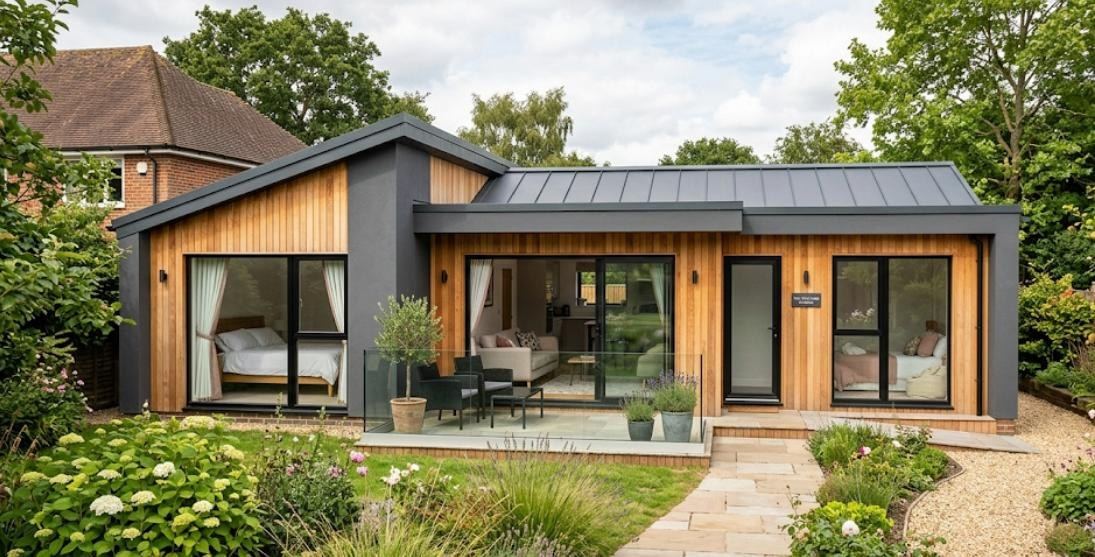
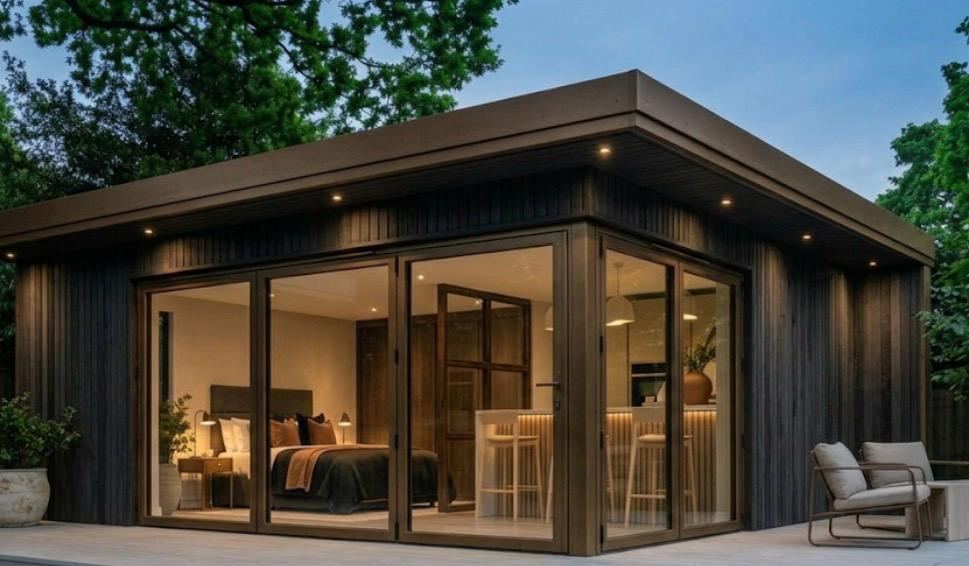
The concept of the granny annex has become increasingly popular in recent years. This is a self-contained living space attached to a larger property, often used to accommodate elderly relatives, but also used for various purposes such as home offices, studios, or even as rental units.

Yes — in most cases, you can rent out a granny annexe in the UK. However, whether you are legally permitted to do so depends on the planning conditions attached to your property, and there are important legal, tax, and safety obligations you must meet before you take on a tenant.
This guide covers everything you need to know, from checking your planning permission to setting up the right tenancy agreement and protecting yourself with the correct insurance.
The legality of renting out a granny annexe hinges on your planning permission. When an annexe is built, the local planning authority may attach a condition stating that it cannot be occupied separately from the main house — this is known as an ancillary use condition or occupancy restriction.
Before advertising your annexe for rent, you must:
If your annexe was built with no such conditions — or under Permitted Development Rights — you are generally free to rent it out. Renting an annexe that has a restrictive planning condition is a breach of planning control and could result in enforcement action, so it is essential to check before proceeding.
The type of agreement required depends on who you are renting to.
If you are renting the annexe to a close family member, you can use a licence agreement rather than a full tenancy. A licence is a simpler, less formal arrangement that sets out the terms of occupation — including any rent payable, house rules, and notice periods. It does not grant the same legal rights as a tenancy, which makes it easier to manage as a live-in landlord situation.
If you are renting to anyone other than a family member, you will almost certainly need an Assured Shorthold Tenancy (AST) agreement. An AST is the standard form of residential tenancy in England and Wales and grants the tenant specific legal rights, including the right to proper notice before eviction. Key requirements include:
You may also consider renting your annexe on a short-term basis via platforms such as Airbnb. However, this may trigger different planning considerations (particularly in London, where there is a 90-night annual limit on short-term lets) and different insurance requirements. Always check your planning conditions and mortgage terms before listing on short-let platforms.
Renting out an annexe has several tax consequences that you need to plan for carefully.
Rental income from your granny annexe is subject to income tax. You must declare it on a Self Assessment tax return each year. You can deduct allowable expenses from your rental income, including:
Once a granny annexe is occupied by a separate household, it may become liable for its own council tax bill — in addition to the main property. However, if the annexe is occupied by a dependent relative (typically someone aged 65 or over, or someone who is severely mentally impaired or substantially and permanently disabled), you may qualify for a council tax exemption. Contact your local council to confirm your position.
If you sell your property in the future, the part used as a rental annexe may not qualify for full Private Residence Relief (PRR) — the relief that usually exempts your home from CGT. This means you could face a CGT bill on a portion of any profit. Speak to a tax adviser before renting to understand the long-term implications.
The government's Rent a Room scheme (which allows you to earn up to £7,500 per year tax-free from a lodger) does not apply to self-contained annexes. It only covers rooms within the main dwelling. If your annexe has its own separate entrance, kitchen, and bathroom, it is treated as a separate property for tax purposes.
As a landlord, you have a legal duty to ensure your annexe is safe and habitable. The key requirements are:
Your standard home insurance policy will almost certainly not cover a rented annexe. You will need to review and potentially upgrade your cover.
A landlord insurance policy specifically for the annexe is strongly recommended. This typically covers:
If you already have buildings insurance on your main property, check whether the annexe is included. Many policies do cover outbuildings and annexes, but coverage for a separately let unit may require an endorsement or a dedicated policy.
If you are renting the annexe furnished, consider landlord contents insurance to cover damage to your belongings caused by tenants.
Beyond the legal and financial requirements, there are a number of practical factors to address:
Rental income from a granny annexe varies significantly by location. As a general guide:
A well-built, modern annexe can represent an excellent return on investment while also increasing the overall value of your property.
Yes. Renting out an annexe may breach the terms of a standard residential mortgage. You must inform your lender before taking on a tenant. Your lender may:
Failing to notify your lender could put you in breach of your mortgage agreement, so always seek approval in writing before proceeding.
If the annexe already exists and was built under valid planning permission, you do not need new planning permission just to rent it out — unless your existing permission includes a condition restricting separate occupation. Always check your planning conditions before letting.
Possibly. If the annexe is let to a separate household, it may become liable for its own council tax. However, if the occupant is a dependent relative, an exemption may apply. Contact your local council for confirmation.
You can consider short-term lets, but you should check your planning conditions, mortgage terms, and insurance policy first. In Greater London, a 90-night annual limit applies to short-term lets without planning permission.
In England, there is no mandatory landlord registration (unlike in Scotland and Wales, where registration is required). However, you must comply with all landlord obligations and it is advisable to join a reputable landlord association.
There is no rent cap in England (other than within the terms of a managed rent scheme). You can set the rent at a market rate. However, once an AST is in place, you can only increase rent in the way specified in the agreement or by following the statutory process.
A modern, well-maintained annexe can add significant value to your property — often 20–30% of the build cost. The ability to generate rental income makes it particularly attractive to buyers.
If you do not yet have an annexe but are considering building one, Vita Modular specialises in high-quality, building control-approved modular annexes. Our annexes are designed and built to the highest standards, come with a 10-year guarantee, and are fully compliant with building regulations — making them straightforward to let from day one.