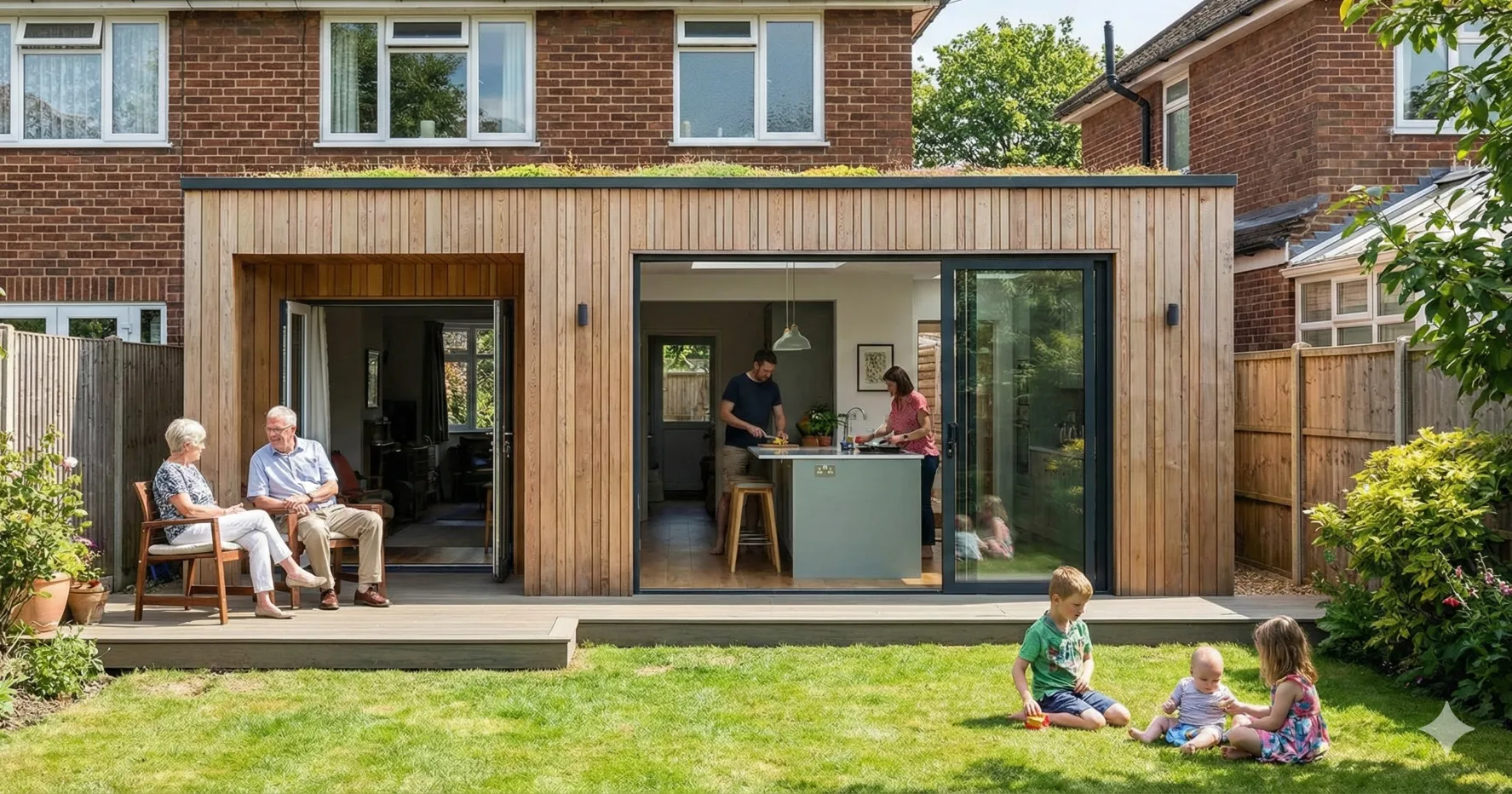
As families grow and circumstances change, many homeowners find themselves facing a familiar question: how do we support older relatives without sacrificing independence, dignity, or quality of life?
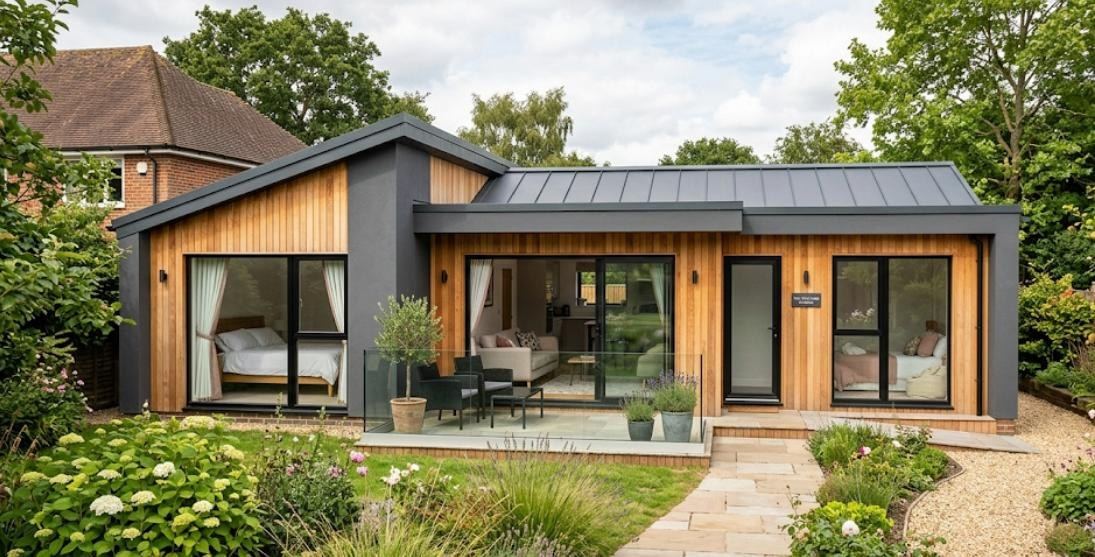
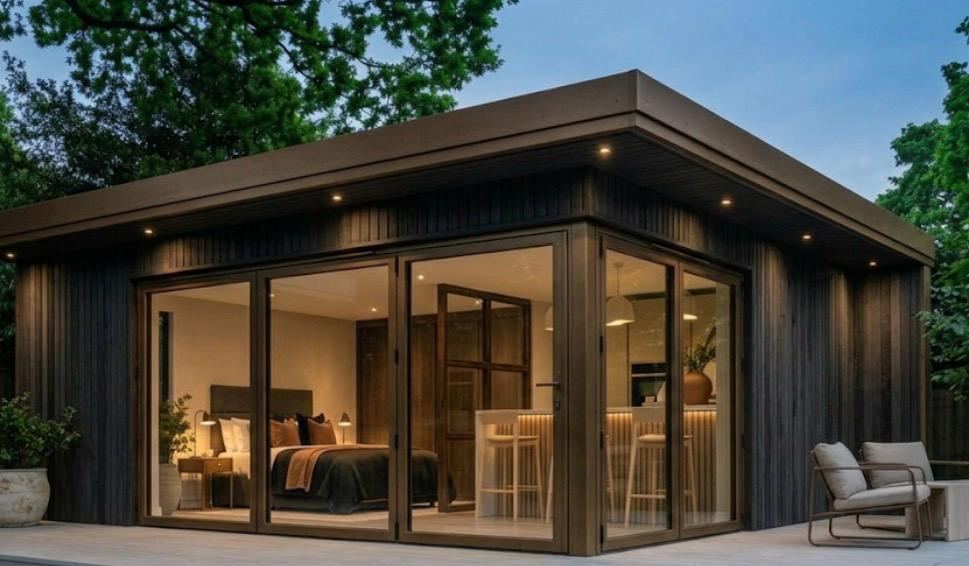
For a growing number of UK households, the answer is not downsizing, nor moving into residential care, but creating a self-contained annexe within the grounds of the family home. Designed correctly, an annexe offers long-term flexibility, peace of mind, and a genuine alternative to relocation.
This guide explains why annexes are increasingly popular for over-65s, what to consider when planning one, and how they compare to other housing options later in life.
Many homeowners aged 55–75 are asset-rich but space-constrained. They may want to remain close to children and grandchildren, while still enjoying privacy and control over their own living environment.
A well-designed annexe allows families to:
• Maintain independence without isolation
• Stay close to support networks
• Avoid the disruption and cost of moving
• Plan proactively for future needs
Importantly, annexes built to full building-regulation standards are treated as permanent dwellings, not temporary garden buildings.
An annexe is a fully self-contained living space with its own kitchen, bathroom, heating, insulation and services. While located within the boundary of the main home, it functions as an independent unit.
This distinction matters, particularly for later-life living:
• Annexes must comply with UK building regulations
• They are suitable for permanent, year-round occupation
• Mortgage lenders and insurers assess them in the same way as traditional construction
• They offer long-term usability rather than short-term flexibility
This is why annexes are typically recommended over standard garden rooms for over-65 accommodation.
Many families choose a purpose-built garden annexe for later-life living because it provides independence today and adaptability for future care needs. Later-life design is about comfort, simplicity and adaptability, not clinical accessibility.
Step-free, single-storey layouts
Level access throughout the building, flush thresholds and logical circulation reduce risk today and future-proof the space for tomorrow.
Calm, well-proportioned interiors
Natural light, views to the garden and clear spatial planning improve wellbeing and make everyday living more enjoyable.
Bathrooms that evolve with needs
Walk-in showers, generous layouts and concealed reinforcement for future grab rails allow the space to adapt without major alterations.
Thermal performance and year-round comfort
High insulation levels, efficient glazing and controlled ventilation ensure the annexe remains comfortable and economical to run throughout the year.
Privacy without isolation
Good construction detailing ensures acoustic separation from the main house, allowing independence while remaining close to family.
Planning permission and building regulations for annexes
Planning requirements depend on location, local authority policy and how the annexe will be used. In many cases, annexes are approved where they remain ancillary to the main dwelling and are occupied by family members.
What is consistent is that all properly built annexes require building control approval. This ensures compliance with:
• Structural safety
• Fire regulations
• Insulation and ventilation standards
• Drainage and services
A building-regulation-compliant annexe provides reassurance for occupants and protects long-term property value.
When families compare options objectively, annexes often sit between moving home and residential care.
• Downsizing can release capital but often brings disruption, fees and distance from family
• Residential care offers support but reduces independence and involves ongoing costs
• An annexe provides independence, proximity and long-term flexibility in one solution
For many families, it represents a practical and emotionally balanced alternative.
An annexe is rarely a single-use space. Over time, it can be repurposed as:
• Guest accommodation
• Home office or studio
• Carer accommodation
• Rental space (subject to permissions)
From a resale perspective, a high-quality annexe adds flexible, future-proofed accommodation rather than a niche extension.
Modern modular construction reduces disruption and uncertainty—both critical considerations when building for older occupants.
With a design-led, off-site approach, Vita Modular delivers annexes that are:
• Manufactured largely off-site for precision and consistency
• Installed on site in a shorter, controlled timeframe
• Fully compliant with building regulations
• Fixed-price and programme-certain
This approach minimises noise, disruption and risk while ensuring a permanent, mortgageable result.
Do annexes for over-65s require planning permission in the UK?
In many cases, annexes can be approved without full planning permission where they remain ancillary to the main dwelling and are occupied by family members. Requirements vary by local authority, location and property type. Professional planning advice is recommended early in the process.
Do all annexes need building control approval?
Not always as there several exemptions for building regulations and planning permission - our buildings are caravan act compliant.
What is the difference between a garden room and an annexe?
A garden room is typically intended for ancillary use and may not meet building-regulation standards for permanent living. An annexe is fully self-contained, building-regulation-compliant and suitable for year-round occupation.
Are annexes mortgageable and insurable?
Yes. When built to full building-regulation standards, annexes are generally treated in the same way as traditional construction by mortgage lenders and insurers.
Can an annexe be designed for future care needs?
Yes. Annexes can be designed with step-free access, adaptable bathrooms and flexible layouts that allow the space to evolve as mobility or care needs change over time.
Will an annexe add value to my property?
In most cases, a well-designed, compliant annexe adds value by increasing usable, flexible living space and improving appeal for multi-generational households.
Can an annexe be used for other purposes in the future?
Yes. Annexes are highly flexible and can later be used as guest accommodation, a home office, carer accommodation or rental space, subject to local permissions.