When it comes to caring for elderly relatives in the UK, families face an increasingly difficult decision: should you invest in a granny annexe on your property, or opt for residential care home accommodation? Both options come with significant financial implications and lifestyle considerations that will affect your entire family for years to come.
This comprehensive guide examines the real costs, benefits, and drawbacks of each approach, helping you make an informed decision based on your family's unique circumstances. We'll break down the financial reality over 5-10 years, explore quality of life factors, and provide clarity on when each option makes most sense.
The numbers might surprise you. Whilst a granny annexe requires an upfront investment of £75,000-£140,000, care home fees averaging £40,000-£60,000 annually will quickly surpass this initial cost. But the decision extends far beyond finances alone.
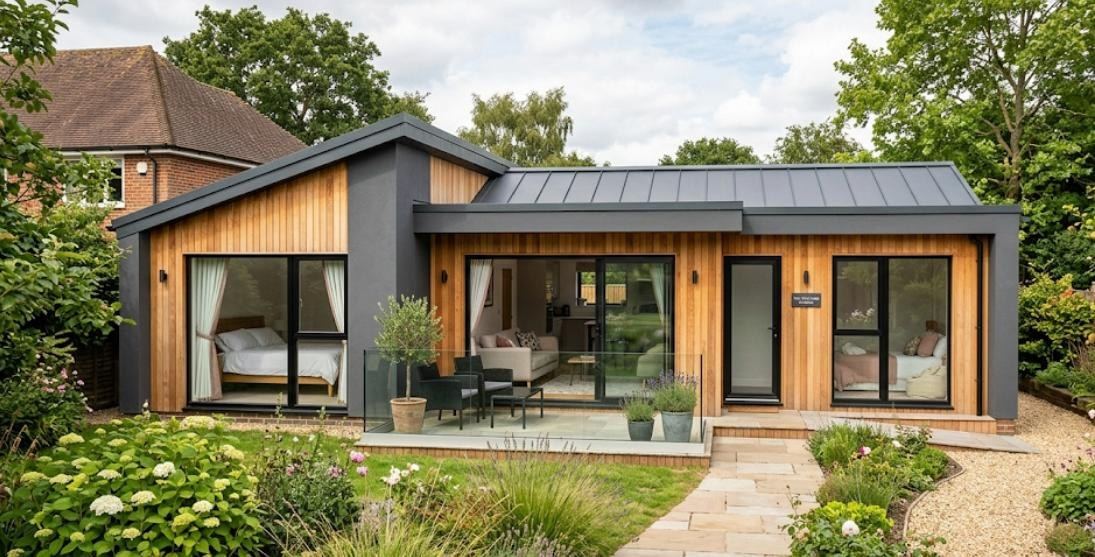
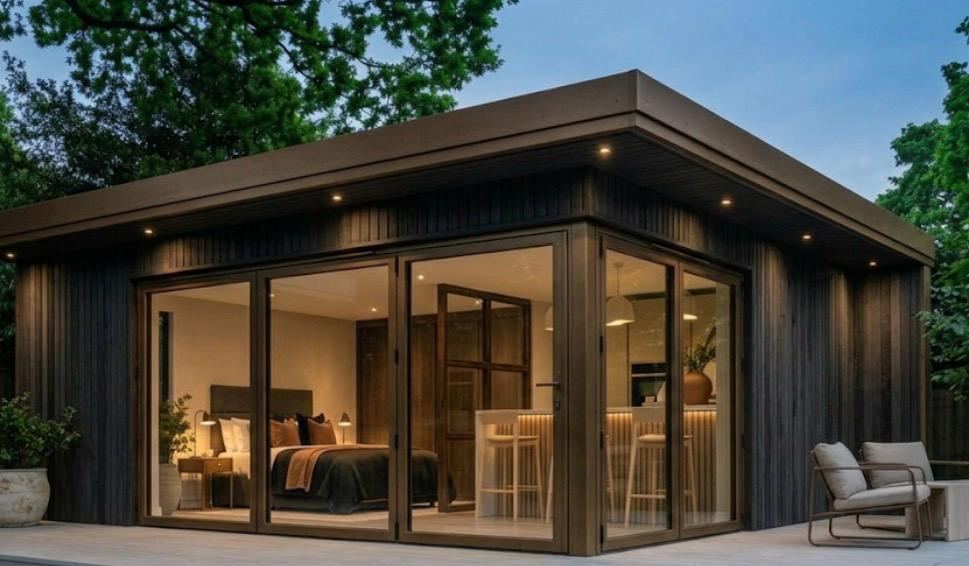
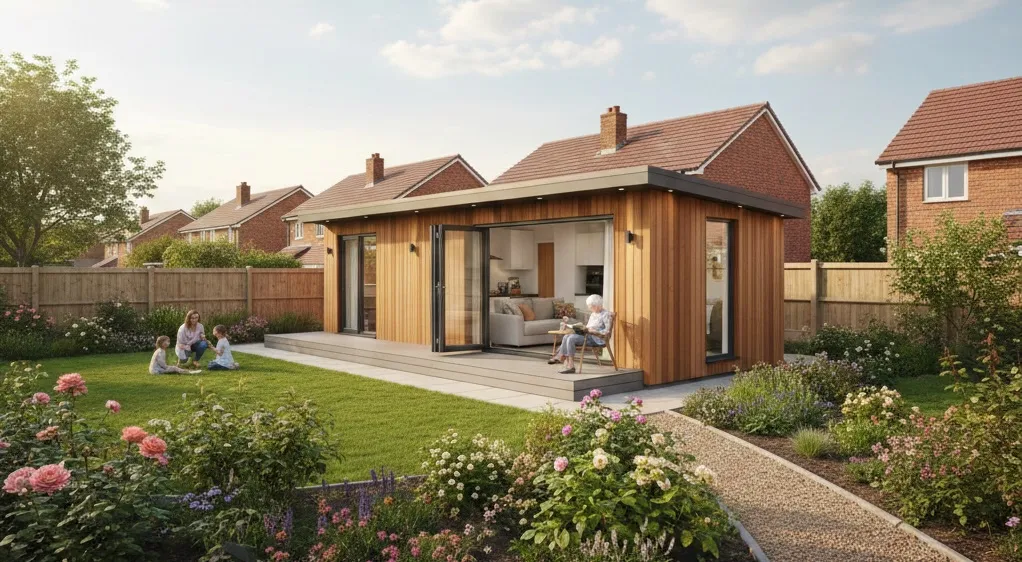
A granny annexe is a self-contained living space built on your property, designed to provide independent accommodation for elderly relatives whilst keeping them close to family. Modern granny annexes are fully equipped with at least 1 bedroom, bathroom, kitchen, and living areas, offering complete privacy and independence.
At Vita Modular, we specialise in steel-framed modular granny annexes that can be built in as little as 6 weeks. Our designs range from compact one-bedroom units to spacious two-bedroom layouts, all constructed off-site for minimal disruption and maximum quality control.
Our annexe’s are available with or without building control approval subject to the clients specification and budget requirements. They are also caravan-act compliant where required.
Key features of a granny annexe:
• Self-contained accommodation on family property
• Complete independence with close family proximity
• Permanent structure that adds property value
• One-time capital investment
• No ongoing accommodation fees
A care home (also known as a residential care home or nursing home) provides 24-hour support and accommodation for elderly people who can no longer live independently. Care homes offer varying levels of support, from basic residential care to full nursing care with medical supervision.
Key features of care home accommodation:
• 24-hour professional care and supervision
• Dedicated staff and medical support
• Social activities and community environment
• Ongoing monthly fees
• Specialised dementia or nursing care available
The right choice depends on your relative's care needs, family circumstances, financial position, and personal preferences. Let's examine the costs in detail.
Upfront Costs: £75,000 - £140,000
The cost of a granny annexe varies based on size, specification, and location:
• One-bedroom annexe: £75,000 - £95,000
• Two-bedroom annexe: £95,000 - £140,000
• Utilities connection: £3,000
Ongoing Costs (Annual):
• Council tax: £1,200 - £1,800 (Band A/B typically)
• Utilities (electricity, water, heating): £1,200 - £2,000
• Maintenance and repairs: £500 - £1,000
• Insurance addition: £200 - £400
Total annual running costs: Approximately £3,100 - £5,200
Important financial considerations:
• Potential property value increase of 5-10%
• Possible rental income (£900/month +) if circumstances change
• Asset remains with your property
• No escalating fees or annual increases
Care Home: Ongoing Annual Fees
Annual Costs: £40,000 - £60,000+
Care home fees in the UK vary significantly by region and level of care:
• Basic residential care: £35,000 - £45,000 annually
• Residential care with nursing: £45,000 - £60,000 annually
• Dementia care: £50,000 - £70,000 annually
• London and South East: Add 20-40% to these figures
Regional variations (2025):
• North of England: £35,000 - £50,000
• Midlands: £40,000 - £55,000
• South of England: £45,000 - £65,000
• London: £60,000 - £90,000+
What's included:
• Accommodation and meals
• Personal care assistance
• Activities and entertainment
• Cleaning and laundry
• Basic medical support
Additional costs:
• Hairdressing and chiropody
• Newspapers and personal items
• Trips and special activities
• Advanced medical care
• Top-up fees if self-funding
Annual increases: Care home fees typically rise by 3-5% annually, often exceeding general inflation rates.
Financial Analysis: 5-10 Year Comparison
Let's examine the true financial picture over time with realistic scenarios.
• Initial investment: £100,000 (mid-range two-bedroom)
• Annual running costs: £4,000 x 5 years = £20,000
• Total 5-year cost: £120,000
• Asset value retained: £100,000+ (increases with property)
• Net cost: £20,000 (running costs only)
• Year 1: £50,000
• Year 2: £51,500 (3% increase)
• Year 3: £53,045 (3% increase)
• Year 4: £54,636 (3% increase)
• Year 5: £56,275 (3% increase)
• Total 5-year cost: £265,456
• Asset value retained: £0
• Net cost: £265,456
5-year difference: £145,456 more for care home (asset value aside)
• Initial investment: £100,000
• Annual running costs: £4,000 x 10 years = £40,000
• Total 10-year cost: £140,000
• Asset value retained: £110,000+ (with property appreciation)
• Net cost: £30,000 (after accounting for property value increase)
• Years 1-5: £265,456 (as above)
• Years 6-10: £289,847 (continuing 3% annual increases)
• Total 10-year cost: £555,303
• Asset value retained: £0
• Net cost: £555,303
10-year difference: £415,303 more for care home
Based on average costs, a granny annexe breaks even against care home fees in approximately 18-24 months. After this point, every additional month represents pure savings compared to care home costs.
Monthly comparison:
• Granny annexe running costs: £250-£450/month
• Care home fees: £3,300-£5,000/month
• Monthly saving with annexe: £2,850-£4,550
Over 10 years, choosing a granny annexe over a care home could save your family between £400,000-£500,000, whilst retaining a valuable property asset.
Advantages
Financial Benefits:
• One-time investment vs ongoing fees
• Property value increase (typically 5-10%)
• Potential rental income (£600-£900/month) if unused
• No annual fee escalations
• Asset remains with family
• Inheritance planning benefits
Quality of Life:
• Family proximity and regular contact
• Maintains independence and dignity
• Familiar surroundings and routine
• Pets allowed
• Personal space and privacy
• Freedom to personalise living space
• No institutional environment
Practical Benefits:
• Quick family response in emergencies
• Easier to monitor health and wellbeing
• Children can visit grandparents easily
• Flexible care arrangements (family + professional carers)
• Cultural and dietary preferences respected
• No visiting hour restrictions
Property Considerations:
• Increases property value
• Can be built in 6 weeks with Vita Modular
• Minimal planning restrictions (under permitted development)
• High-quality steel-frame construction lasts 60+ years
• Modern, energy-efficient design
• Future adaptability for other uses
Disadvantages
Upfront Costs:
• Initial capital required (£75k-£140k)
• Planning and groundworks costs
• Potential need for financing/mortgage extension
Care Limitations:
• May not be suitable for high-level medical needs
• Family must arrange external care services
• 24-hour supervision not included
• Dementia care may become challenging
• Family responsibility for wellbeing monitoring
Practical Challenges:
• Requires suitable garden space (typically 40-60m²)
• Planning permission may be needed in some cases
• Utilities connection and running costs
• Maintenance responsibility
• Potential family boundary issues
Suitability Considerations:
• Best for relatively independent relatives
• Requires family living nearby for regular support
• May need adaptation as care needs increase
• Not ideal for complex medical conditions
Advantages
Professional Care:
• 24-hour trained staff supervision
• Medical support and nursing care available
• Dementia care specialists
• Regular health monitoring
• Emergency response systems
• Medication management
• Physiotherapy and rehabilitation
Social Benefits:
• Built-in social community
• Organised activities and entertainment
• Meals and companionship provided
• Reduced isolation for single elderly people
• Peer support from other residents
Family Considerations:
• Reduced family care burden
• Professional responsibility for safety
• No property modifications needed
• Flexibility to move if circumstances change
• Peace of mind regarding supervision
Practical Benefits:
• All-inclusive package
• No property maintenance
• Meals prepared daily
• Cleaning and laundry included
• No upfront capital needed (initially)
Disadvantages
Financial Drawbacks:
• High ongoing costs (£40k-£60k annually)
• Annual fee increases (typically 3-5%)
• Additional charges for extras
• Costs continue indefinitely
• No asset or equity retained
• Potential for forced sale of family home to fund fees
Quality of Life:
• Loss of independence
• Institutional environment
• Shared facilities and routines
• Limited personalisation of living space
• Visiting hour restrictions
• Distance from family (depending on location)
• Adjustment challenges to communal living
Practical Concerns:
• Variable care quality between homes
• Staff turnover affecting continuity
• Potential for under-staffing
• Covid-19 and infection control restrictions
• Limited privacy
• Regimented daily schedules
• Possible separation from spouse if different care needs
Long-term Issues:
• Depletion of savings and assets
• No inheritance left for family
• Lack of control over daily life
• Potential need to move homes if needs change
• Waiting lists for preferred homes
A granny annexe is typically the best choice when:
Care Needs:
• Your relative is relatively independent or needs low-level support
• Care requirements can be met with family help plus visiting carers
• No complex medical conditions requiring 24-hour nursing
• Good mobility or manageable mobility issues
• Cognitive function allows independent living
Family Circumstances:
• Family members live close enough for regular support (ideally on-site)
• Multiple family members can share care responsibilities
• Strong family relationships and willingness to provide care
• Children benefit from grandparent proximity
• Cultural or religious preference for family-based care
Financial Position:
• Capital available for upfront investment (£75k-£140k)
• Long-term planning (5+ years) makes financial sense
• Desire to preserve inheritance and family assets
• Property value increase is beneficial
• Avoiding ongoing care home fees is priority
Property Suitability:
• Garden space available (typically 40-60m² minimum)
• Property allows annexe under permitted development
• Utilities can be connected reasonably
• Suitable access for construction and future use
Personal Preferences:
• Strong desire for independence
• Preference for familiar surroundings
• Want to remain in community and near family
• Value privacy and personal space
• Cultural norms favour multi-generational living
A care home becomes the more appropriate choice when:
Medical and Care Needs:
• Complex medical conditions requiring regular nursing intervention
• Advanced dementia requiring specialist memory care
• High risk of falls or medical emergencies
• Need for 24-hour supervision and monitoring
• Extensive personal care requirements (washing, dressing, feeding)
• End-of-life care with palliative support
Family Circumstances:
• No family members living nearby or available for regular care
• Family unable to provide physical or emotional care support
• Existing family relationships are strained
• Work or other commitments prevent adequate family care
• Single elderly person with no close family
• Safety concerns about relative living alone
Safety Concerns:
• Wandering behaviour (dementia)
• Risk of self-harm or neglect
• Inability to call for help in emergencies
• Fire safety concerns
• Medication management too complex for family
Social Needs:
• Severe isolation if living alone
• Need for structured social activities
• Benefits from peer interaction
• Requires daily mental stimulation and activity programmes
Rapid Decline Situations:
• Sudden deterioration in health
• Hospital discharge requiring immediate care solution
• Family unable to make property modifications quickly
• Temporary or respite care needed urgently
Important consideration: Many families choose a granny annexe initially, then transition to care home when medical needs escalate. The annexe can then be rented (£600-£900/month) to offset care home fees, or used by other family members.
Many families successfully combine both options:
Annexe + Professional Home Care
• Install granny annexe for accommodation (£75k-£140k)
• Arrange visiting carers for specific times (£15-£25/hour)
• Family provides emotional support and companionship
• Professional carers handle personal care, medication, meals
• Typical carer costs: £200-£600/week depending on hours
Total annual cost: £10,000-£30,000 (annexe + care)
• Still significantly less than care home (£40k-£60k)
• Maintains independence and family proximity
• Professional care quality when needed
Annexe + Day Care
• Relative lives in annexe
• Attends day centre 2-5 days/week (£50-£80/day)
• Provides social interaction and activities
• Gives family respite during working hours
• Medical monitoring at day centre
Typical cost: £5,000-£15,000 annually for day care
• Combined with annexe running costs still very cost-effective
• Prevents isolation
• Regular professional health monitoring
Annexe + Respite Care
• Primary residence in annexe
• Regular short stays in care home for respite (1-2 weeks quarterly)
• Gives family holidays and breaks
• Relative experiences care home environment
• Easier transition if permanent care home becomes necessary
Respite cost: £1,000-£2,000 per week
• Occasional use (4-8 weeks/year): £4,000-£16,000
• Still substantially cheaper than permanent care home
• Maintains annexe as primary home
Making Your Decision: Key Questions to Ask
Assess Care Needs:
1. What level of care is needed now?
2. How might care needs change in 2-5 years?
3. Are there specific medical conditions requiring professional nursing?
4. Is dementia or cognitive decline a factor?
5. Can family provide daily care and monitoring?
Evaluate Family Capacity:
1. Do family members live close enough for regular support?
2. Can multiple family members share care responsibilities?
3. Are work schedules compatible with providing care?
4. Is the family relationship strong enough for close proximity?
5. How will this impact other family members (especially children)?
Consider Finances:
1. Is £75k-£140k capital available for annexe?
2. What are monthly/annual budgets for ongoing costs?
3. How long is relative likely to need care (life expectancy)?
4. Is preserving inheritance and property value important?
5. What happens if circumstances change?
Property Suitability:
1. Is there adequate garden space (40-60m² minimum)?
2. Does property allow annexe under planning rules?
3. Can utilities be connected feasibly?
4. Will annexe add value to property?
5. Is access suitable for construction and future use?
Think Long-Term:
1. What if care needs increase substantially?
2. What happens to annexe if no longer needed?
3. Could it be rented to offset future care costs?
4. Will other family members benefit from the annexe later?
5. Is this a 5+ year decision?
The decision between a granny annexe and care home isn't purely financial—though the numbers clearly show substantial long-term savings with an annexe. It's about balancing quality of life, family dynamics, care needs, and financial realities.
A Granny Annexe is Ideal If You:
• Want to keep elderly relatives close to family
• Have capital for upfront investment (£75k-£140k)
• Can provide family support supplemented by visiting carers
• Value independence and dignity for your relative
• Want to preserve family assets and property value
• Are planning for 5+ years of care
A Care Home is Necessary If:
• Complex medical or dementia care is required
• 24-hour professional supervision is essential
• No family available for regular care and monitoring
• Safety cannot be adequately managed at home
• Immediate solution needed without property modifications
If you're considering a granny annexe:
1. Assess your situation using the questions in this guide
2. View our granny annexe designs and specifications
3. Get a personalised quote based on your requirements
4. Visit our showroom to see quality and space firsthand
5. Speak with our team about planning, timescales, and finance options
At Vita Modular, we've helped hundreds of UK families create beautiful, practical granny annexes that bring families together whilst maintaining independence. Our steel-framed modular construction means your annexe can be built in as little as 6 weeks, with minimal disruption to your property.
Our granny annexe service includes:
• Free initial consultation and site assessment
• Planning guidance and support
• Full Building Regulations compliance where required
• Caravan act compliant where required
• 6-week build time
• 10-year structural warranty
• Energy-efficient design (A-rated)
• Turnkey solution including all approvals to completion.
Ready to explore your options?
Email: info@vita-modular.co.uk
Questions? We're here to help you make the right decision for your family.