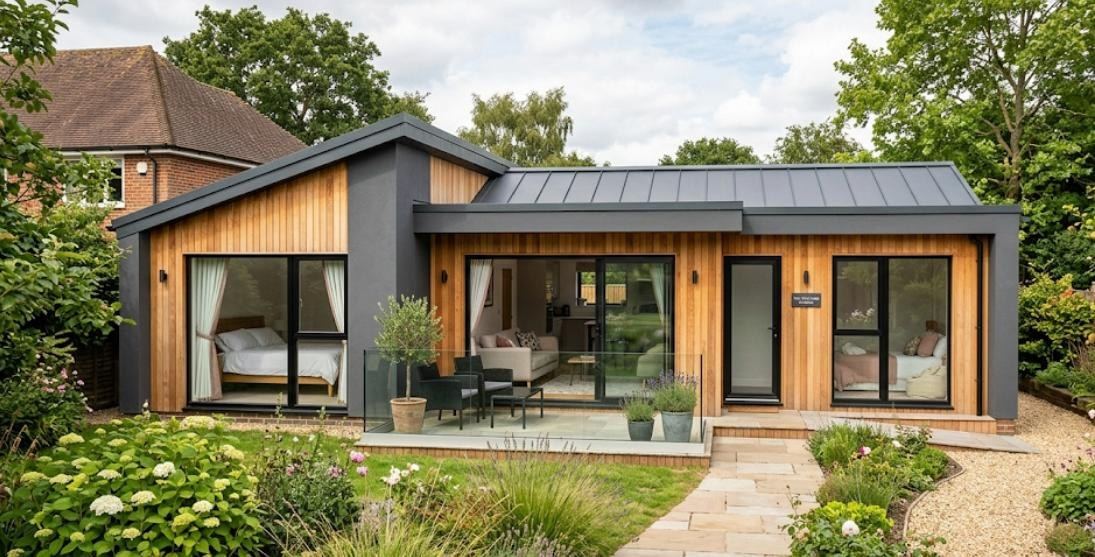
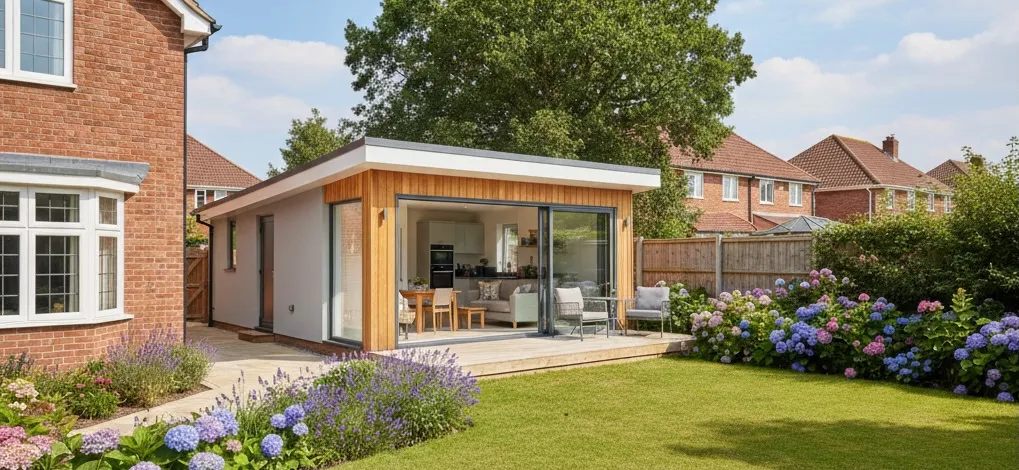
UK residential care now averages £67,600 a year, with no lifetime cap. A granny annexe from £58,950 breaks even in under 11 months — and leaves you with a lasting asset. Here's the honest comparison.

When a parent starts to need more support, the instinct is often to wait and see. But waiting has a specific financial cost, and it compounds fast.
UK residential care home fees now average £67,600 per year for residential care, and £78,600 for nursing care (Lottie / carehome.co.uk, 2026). And the government's proposed £86,000 lifetime cap on care costs — which would have limited what any family could be asked to pay — was scrapped in 2024. There is currently no ceiling on total care fees.
A granny annexe offers a different approach. Rather than transferring costs to a managed facility indefinitely, you bring your relative home in their own self-contained space, with their independence intact and family in the garden. This guide compares the two options honestly across cost, care capability, planning, tax, and long-term flexibility.
The short answer. A one-bedroom Vita Modular annexe from £58,950 inc. VAT breaks even against residential care fees in under 11 months — and unlike care fees, it's an asset that largely pays for itself, adding on average £1.20 of home value for every £1 spent. With the £86,000 lifetime cap scrapped, there is no ceiling on what a care home may cost over time.
| Granny annexe (Vita Modular) | UK residential care home | |
|---|---|---|
| Upfront cost | From £58,950 (24m² one-bed, Caravan Act) | £0–£5,000 (deposit / assessment) |
| Annual ongoing | ~£0 (maintenance only) | £67,600 residential / £78,600 nursing |
| Breakeven | Under 11 months | n/a — costs continue indefinitely |
| 5-year total | £58,950–£65,000 | £338,000 residential / £393,000 nursing |
| Asset value at end | Permanent property addition | £0 — no residual asset |
| Independence | Full — own front door | Managed setting |
| Proximity to family | In the garden | Visit-dependent |
A family paying £67,600 a year for residential care reaches the full cost of a one-bedroom annexe within around 10.5 months. Past that point, the care home keeps costing £67,600 every year. The annexe does not.
And this is the part families most often miss: a care home fee is money spent and gone, while an annexe is an investment that largely returns itself. On average, a modular annexe adds around £1.20 of market value to your property for every £1 spent — so a £100,000 annexe can add roughly £120,000 to the value of your home. You're not choosing between spending £58,950 on an annexe or £67,600 a year on care; you're choosing between an asset that holds — and often grows — its value, and fees that leave nothing behind.
The ROI in one line. Care fees leave no residual asset. An annexe returns an average of £1.20 in added home value for every £1 spent — roughly £120,000 of value on a £100,000 annexe — on top of the ~£67,600 a year you're no longer paying for residential care. Over five years, that's the difference between a permanent asset and £338,000 of fees with nothing to show for it.
The Care Act 2014 originally proposed a lifetime cap on what any individual could be asked to pay for personal care — most recently set at £86,000. In November 2024, the government confirmed the cap would not be implemented. Practically: there is no ceiling on total care costs. A relative with a long-term condition can accumulate £200,000, £300,000, £400,000 in care fees over five to ten years — with no protection from that. This is the single most important context for any care-planning decision made from 2025 onwards.
Local authority care funding is means-tested. Above £23,250 in capital, the person is expected to fund their own care; below £14,250 the authority funds it in full, with a taper between.
A common concern: does building an annexe count as 'deprivation of assets'? Generally, no — building an annexe is a legitimate housing decision providing ongoing accommodation for a relative, not a gift or transfer of property. However, timing matters: local authorities can scrutinise transactions made shortly before a funding application. Anyone considering an annexe as part of long-term care planning should take independent legal advice — Age UK and Solicitors for the Elderly are credible starting points.
An annexe built as separate accommodation for a dependent relative typically qualifies for Council Tax Class W exemption — meaning no council tax on top of the main property's, provided it's occupied by a dependent relative (over 65, or someone with a substantial and permanent disability, or someone severely mentally impaired). It isn't automatic; you apply to your local council. But it removes what would otherwise be a £1,500–£2,500 annual charge.

This is the question families most often ask, and content typically fails to answer honestly. An annexe is not a nursing home. If your relative needs 24-hour medical supervision, complex nursing, or specialist dementia care, a nursing home provides what a family property cannot.
But a well-designed annexe can absolutely support significant care needs — including limited mobility, wheelchair use, and progressive disability. A real example: Vita Modular's Reading annexe — Rita's home — was built to DDA-informed accessibility standards. Step-free access throughout. A walk-in shower, not a bath. Wheelchair-standard door widths, corridor turning circles and internal transitions. Grab-rail provision and lever taps. This is not additional cost — it's how the annexe was specified from day one, at £165,000 for a 55m² two-bedroom design, delivered in 7 weeks on site.
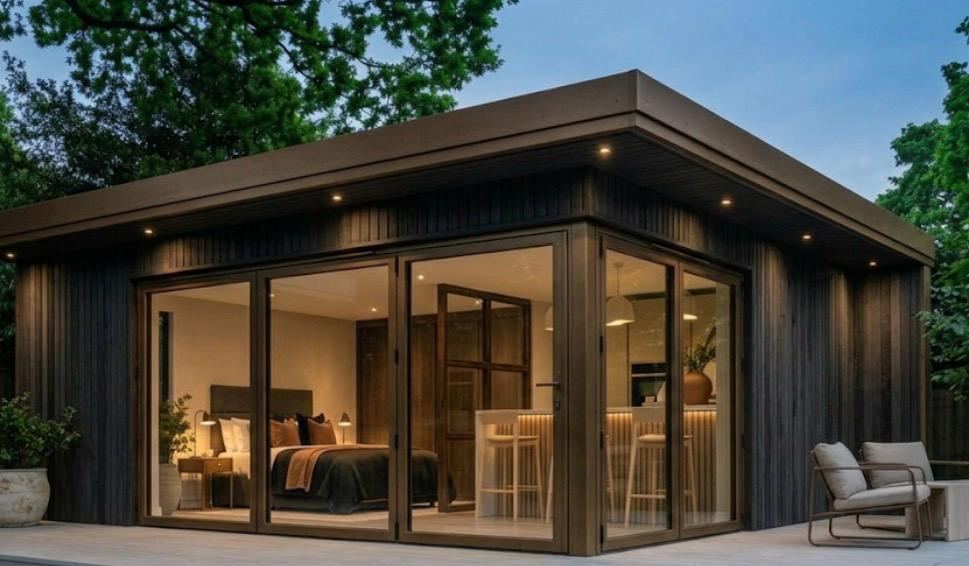
For families whose relative needs company, safety, proximity, and a home that accommodates a walker or wheelchair — but not medical nursing — an annexe of this specification meets those needs better than a residential care home, at a fraction of the ongoing cost.
Planning treatment depends on the build route.
Annexes designed under the Mobile Homes Act 1983 and BS3632 do not require full planning permission. Instead, a Lawful Development Certificate confirms compliance with the Caravan Act definition. Faster, less costly, and 0% VAT.
A self-contained annexe built to full Building Regulations will usually require full planning permission. It carries 20% VAT and is slower to approve, but is treated as a permanent extension to the property.
Which suits depends on site, intended use and local planning history — Vita's team advises at every free site survey, included as standard.
An annexe is a flexible long-term asset. If care needs escalate, or a relative passes away, it doesn't sit unused: