Most garden annexes need either a Lawful Development Certificate or full planning permission, because people live in them. Here's how each route works, how the Caravan Act and Building Regulations routes compare, and what decides it for your plot.
The short answer. Usually, yes — or at least some form of formal consent. A garden annexe that someone will live in, with a bedroom, kitchen and bathroom, falls outside the permitted development rules for garden buildings. Depending on how it is built and used, it is consented in one of two ways: a Lawful Development Certificate for an annexe that stays ancillary to the main house (often the route for a Caravan Act annexe), or full planning permission — the safer route for larger annexes and in the Green Belt or a conservation area. Separately, the build route decides whether it is signed off under Building Regulations or built to the BS3632 standard under the Caravan Act. Vita advises on both at a free survey and manages the application.
Permitted development lets you put up many garden buildings without applying for planning permission — offices, gyms, studios and sheds — as long as they are used for purposes incidental to the enjoyment of the house and stay within height and coverage limits (generally a single storey, no more than 2.5m high within 2m of a boundary, not forward of the front of the house and covering no more than half the garden).
An annexe is different because people live in it. Sleeping accommodation, a kitchen and a bathroom are primary living accommodation, not incidental use, so an annexe can't rely on outbuilding permitted development in the way a garden room can. That's why almost every self-contained annexe needs either a certificate confirming it is lawful or a planning permission.
Where an annexe is used as part of the same household as the main house — a parent, an adult child, family members sharing the plot — and is a structure that meets the legal definition of a caravan, it can often be confirmed as lawful through a Lawful Development Certificate (LDC). An LDC is formal written confirmation from the council that the annexe and its use are lawful, without a full planning application. It is quicker and cheaper than full planning, and it gives you a document to rely on when you sell or remortgage.
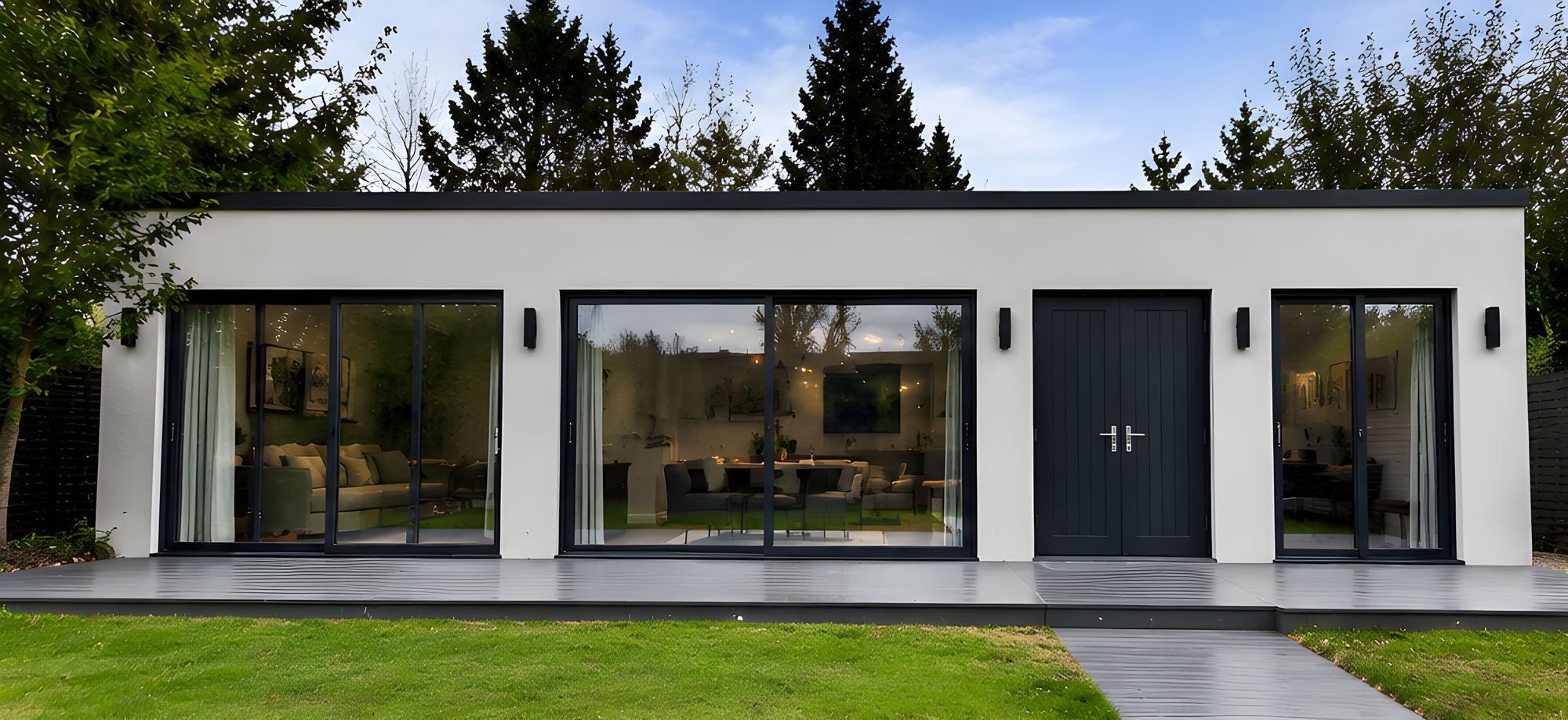
Our 45m² 1-bedroom garden annexe in Woking was approved this way, with an LDC from Woking Borough Council confirming its ancillary use.
Full planning permission is the reliable route when the annexe is large, when the site is in the Green Belt, a conservation area, a National Landscape (AONB) or the grounds of a listed building, or when the annexe won't meet the conditions for an LDC. It takes longer — typically around eight weeks for a decision once the application is validated — but it gives the most certainty.
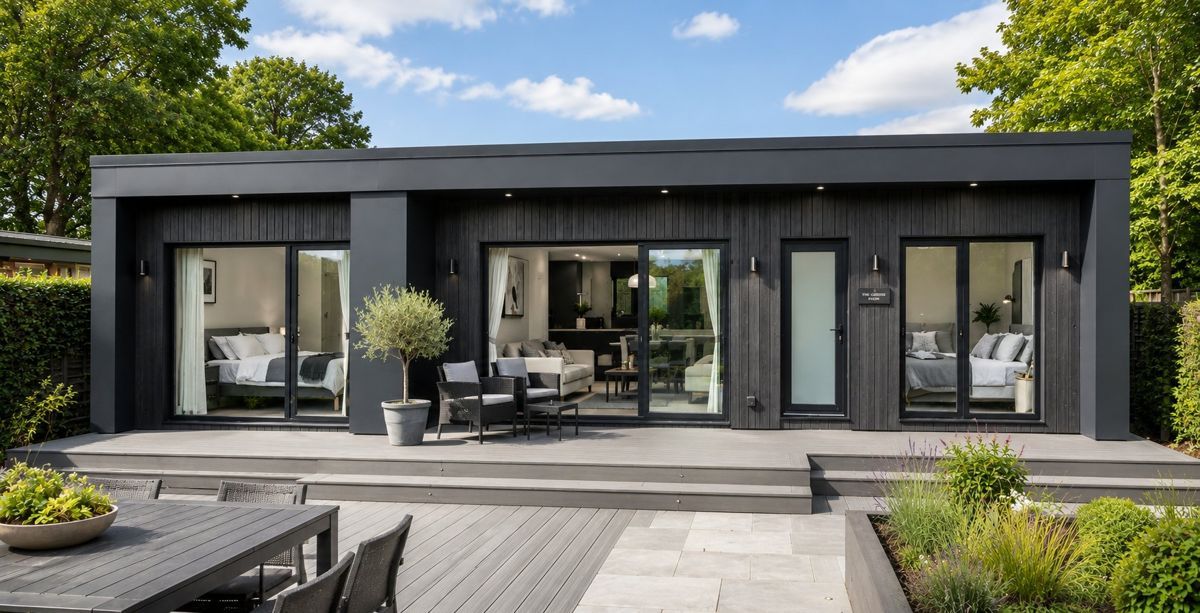
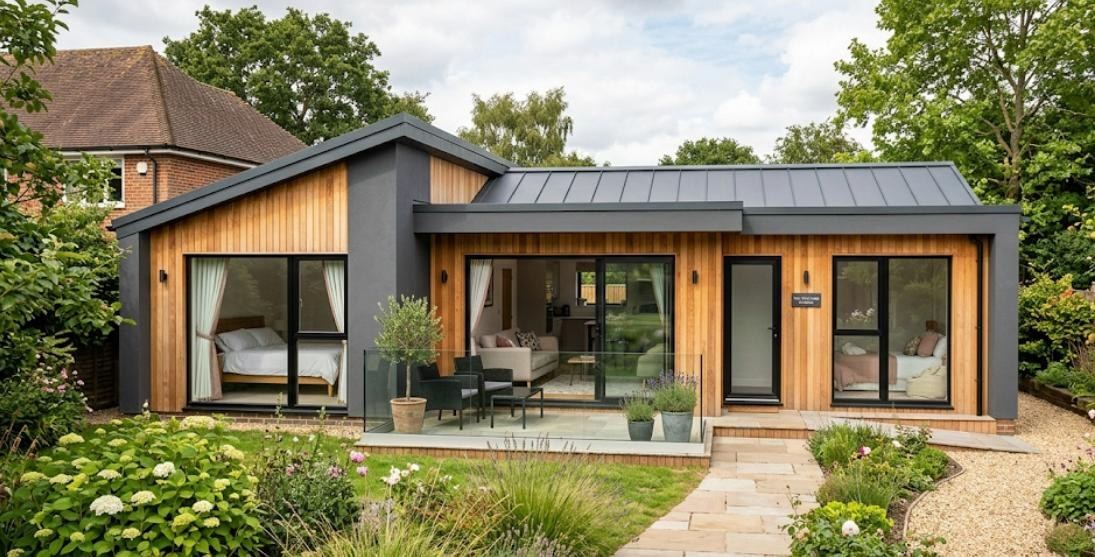
Our 75m² 3-bedroom annexe in Chigwell went through full planning permission with Epping Forest District Council, the right call for a three-bedroom building in an area with extensive Metropolitan Green Belt.
Either way, an annexe consented as ancillary accommodation must stay part of the same household. If you want to let it independently or sell it separately, that is a new dwelling, which needs its own planning permission. See our guide to renting out a granny annexe.
Planning decides whether you can have the annexe. The build route decides how it is constructed and signed off — and it is one of the biggest factors in cost.
| Caravan Act route | Building Regulations route | |
|---|---|---|
| Built to | BS3632 residential park-home standard | Full UK Building Regulations |
| Sign-off | Self-certified to BS3632 | Building control approval and completion certificate |
| Size limit | Must meet the legal caravan definition: up to 20m × 6.8m, 3.05m internal height, no more than two sections | No fixed maximum |
| Typical consent | Often a Lawful Development Certificate where use is ancillary | Usually full planning permission |
| VAT | 0% | 0% |
| Base cost | Lower | Around 10% higher |
| Best for | Cost and speed where the annexe stays part of the household | Permanence, larger or bespoke buildings, valuation certainty |
Vita builds both. Prices start from £54,790 inc. VAT for a 1-bed, £85,990 for a 2-bed and £105,490 for a 3-bed. For the cost difference in detail, see Caravan Act vs Building Regulations: which route costs less.
At a free site survey, Vita's in-house design team checks your property's planning position, recommends the consent route and the build route, and prices the annexe on a fixed-price contract. We then prepare and submit the LDC or planning application, deal with the council, and — on the Building Regulations route — manage building control through to the completion certificate.
Not sure which route your annexe needs? Book a free site survey — we'll advise on planning and give you a fixed price. Get your instant fixed price →
Sometimes, but not under ordinary permitted development. Because an annexe is lived in, it usually needs either a Lawful Development Certificate confirming it is lawful as accommodation ancillary to the main house, or full planning permission. An LDC is common for Caravan Act annexes used by family members.
Not as living accommodation. Permitted development for outbuildings covers buildings used for purposes incidental to the house, such as an office or gym. A building with a bedroom, kitchen and bathroom that someone lives in falls outside it.
It depends on the build route. An annexe built to full Building Regulations needs building control approval and a completion certificate. An annexe built under the Caravan Act is built and self-certified to the BS3632 residential park-home standard instead.
To meet the legal definition of a caravan it must be no more than 20m long and 6.8m wide, with an internal height of no more than 3.05m, and be capable of being moved in no more than two sections. That still allows a large three-bedroom annexe.
Not independently, without further permission. An annexe consented as ancillary accommodation has to stay part of the same household. Letting it to an unrelated tenant or selling it separately usually needs planning permission for a new dwelling.
A full planning application usually takes around eight weeks for a decision once it is validated, and an LDC is often similar or quicker. Vita's typical programme allows for this, with a four-week lead time to start on site once consent is in place.