What a house extension costs in the UK in 2026: per m² rates by type and region, worked examples by size, VAT, fees and the extras most quotes leave out.
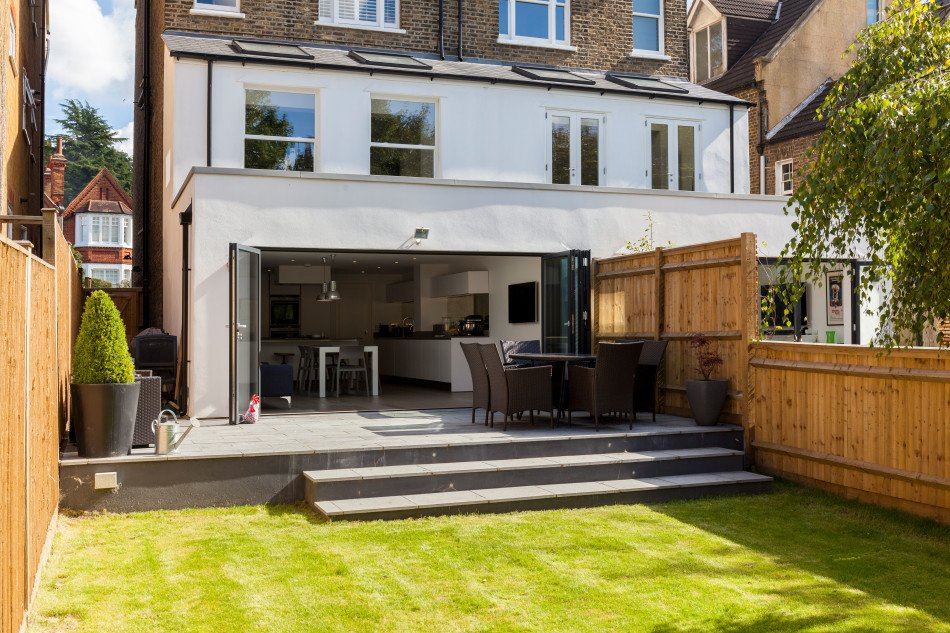
What a house extension really costs in the UK in 2026: the per m² rates builders are quoting, how type, size and region change the number, and the VAT, fees and extras that decide what you actually pay.
Across the UK, most builders price a standard single storey extension at around £1,800 to £3,000 per m² for the build itself. That figure usually excludes VAT and professional fees, and often excludes glazing, electrics, flooring and decoration too.
In practice that means a 20 m² single storey extension typically costs £40,000 to £56,000 to build. Add 20% VAT, drawings, structural calculations, building control and a sensible contingency, and most homeowners should budget nearer £55,000 to £80,000 all-in for that size.
Location moves the number more than anything else. London rates run at roughly £2,200 to £3,500 per m², while the North East, Wales and Scotland sit nearer £1,250 to £2,200 per m².
Read every rate carefully. Two quotes at the same per m² figure can be £15,000 apart on a 20 m² extension, depending on whether they include VAT, glazing, electrics, flooring and decoration. The section on comparing quotes below shows how to check.
The table shows typical UK build rates by extension type, using mid-range Midlands prices as the national baseline (excluding VAT and fees). The right-hand column shows our own fixed starting prices for comparison. Ours include VAT and a finished, decorated room.
| Extension type | Typical size | UK build rate (ex. VAT) | Vita Modular, from (inc. VAT) |
|---|---|---|---|
| Single storey rear | 15–21 m² | £1,600–£2,200 per m² | £45,000 |
| Side return | 12–18 m² | £1,800–£2,800 per m² | £36,000 |
| Wrap-around | 21–28 m² | £1,700–£2,600 per m² | £63,000 |
| Two storey | 30–40 m² | £1,200–£2,000 per m² | £90,000 |
The most common extension in the UK, usually built to open up a kitchen-diner onto the garden. Its cost is driven by the length of the opening into the existing house, the amount of glazing and the roof type. A flat roof with rooflights costs less than a pitched or vaulted roof.
Side returns fill the narrow passage beside a Victorian or Edwardian terrace. The per m² rate is higher than a rear extension because the area is small but the fixed costs are not: the structural opening, the party wall and the drainage that usually runs along the passage. See our side return cost guide for a detailed breakdown.
A wrap-around combines a side return and a rear extension in an L shape. It creates the biggest change to a ground floor, and it usually needs a larger steel frame at the corner and more planning scrutiny.
Building upwards is the cheapest space per m², because the foundations and roof are shared across two floors. The total is still higher, and two storey extensions are much more likely to need full planning permission.
Industry estimates for a standard-quality single storey extension, before VAT and fees, look like this:
| Size | Build cost (ex. VAT and fees) | With 20% VAT |
|---|---|---|
| 20 m² | £40,000–£56,000 | £48,000–£67,200 |
| 30 m² | £60,000–£84,000 | £72,000–£100,800 |
| 50 m² | £100,000–£140,000 | £120,000–£168,000 |
For comparison, our own fixed prices, including VAT and a finished, decorated room, start at £45,000 for 15 m², £54,000 for 18 m² and £63,000 for a 21 m² wrap-around. A 40 m² two storey extension (5 × 4 m over two floors) starts at £117,750.
Larger extensions cost less per m², because fixed costs like the structural opening, drainage connection and site set-up are spread over more floor area.
Labour and materials costs vary widely across the UK. These are typical mid-range rates per m², excluding VAT, professional fees and interior fit-out.
| Region | Single storey per m² | Two storey per m² |
|---|---|---|
| London | £2,200–£3,500 | £1,800–£2,800 |
| South East | £1,900–£2,900 | £1,500–£2,300 |
| East of England | £1,750–£2,700 | £1,400–£2,100 |
| South West | £1,650–£2,600 | £1,350–£2,000 |
| Midlands | £1,500–£2,500 | £1,200–£2,000 |
| North West | £1,400–£2,300 | £1,100–£1,850 |
| Yorkshire and the Humber | £1,350–£2,200 | £1,100–£1,800 |
| North East | £1,250–£2,100 | £1,000–£1,700 |
| Scotland | £1,350–£2,200 | £1,100–£1,800 |
| Wales | £1,300–£2,150 | £1,050–£1,750 |
London is around a third above the national average, the North East around 15% below. For local detail, see our guides to extension costs in London and extension costs in Cheshire.
The headline per m² rate is the least reliable number in any extension quote. Before you compare, check whether each quote covers:
On a fully like-for-like basis, with VAT and a finished, decorated room included, we typically see traditional builders come in at £3,800 per m² or more. On an 18 m² extension that is around £68,400, against £54,000 at our rate of £3,000 per m² including VAT.
Whoever builds your extension, these items are usually quoted separately because they depend on your house and site:
| Item | Typical cost |
|---|---|
| Architectural drawings | 3%–15% of the build cost, or a fixed fee |
| Structural engineer | around £1,000 (simple) to £5,000 (complex) |
| Householder planning application (England) | £548 (from 1 April 2026) |
| Building control | set by your council, typically several hundred pounds to £1,500+ |
| Party wall surveyor | about £1,000 per adjoining owner |
| Kitchen fit-out | £15,000–£35,000 |
| Contingency | 10% of the build cost |
Other site-specific items to budget for are demolition of an existing conservatory or outbuilding, ground preparation, drainage diversions and the structural opening into the existing house. Our own prices include VAT, foundations, frame, walls, render, flat roof, electrics, lighting, flooring, decoration and doors up to 3m wide. They exclude demolition, ground preparation, drainage, professional fees, statutory approvals and structural openings.
Many single storey rear extensions can be built under permitted development without a planning application, although an application for a Lawful Development Certificate is still worth considering. Building regulations approval is needed either way.
Most UK extensions are still built traditionally, in brick and block on site. Modular and off-site extensions are made largely in a factory and installed in weeks, which shortens the time your home is a building site and makes a fixed price easier to guarantee. We build modular extensions with a 4-week lead time, 4–6 weeks on site and a 10-year structural warranty. For a full breakdown, see how much a modular extension costs.
Moving costs money that never goes into your home. In England, stamp duty on a £300,000 purchase is £5,000 for a home mover, and estate agency fees, legal costs and removals often add another £8,000 to £12,000. Extending also lets you stay in a street and school catchment you already know. The main risk is over-extending beyond what homes on your street sell for, so check local sold prices before settling on a size.
Our instant quotation generator gives you a tailored, all-inclusive figure in minutes. Our Price Beat Guarantee means we will better any genuine like-for-like quote.
Get a Free Consultation →Most UK builders price a standard single storey extension at around £1,800 to £3,000 per m² for the build, before VAT and professional fees. In London expect roughly £2,200 to £3,500 per m², and in the North East, Wales and Scotland nearer £1,250 to £2,200 per m². A 20 m² single storey extension typically costs £40,000 to £56,000 for the build alone. Add 20% VAT, fees and a 10% contingency for a realistic all-in budget.
A mid-range single storey rear extension costs about £1,600 to £2,200 per m² in the Midlands before VAT, with a wider UK range of £1,800 to £3,000 per m² depending on region and finish. Premium finishes and complex sites can reach £3,500 per m² or more. Always check whether a per m² rate includes VAT, glazing, electrics, flooring and decoration, because many headline rates do not.
Yes. A two storey extension usually costs less per m² than a single storey one, because the foundations and roof, two of the most expensive elements, are shared across two floors. Typical mid-range rates are around £1,200 to £2,000 per m² before VAT outside London. The total cost is still higher because you are building twice the floor area.
Yes, VAT at 20% applies to house extensions on existing homes, and many builders quote without it. That alone turns a £2,500 per m² quote into £3,000 per m². Ask every builder to confirm in writing whether their price includes VAT, and compare all quotes on the same basis.
Common extras are architectural drawings (often 3% to 15% of the build cost), structural engineer calculations (around £1,000 to £5,000), building control fees set by your council, the householder planning fee of £548 in England, party wall surveyors (about £1,000 per neighbour), drainage diversions, demolition, ground preparation and a kitchen or bathroom fit-out. Budget a 10% contingency on top.
Keep the shape simple and rectangular, use a flat roof, stay within permitted development where you can, avoid moving drains, fix the specification before work starts, and get every quote on a like-for-like, all-inclusive basis. Fixed-price contracts and shorter build programmes also reduce the risk of overruns and the cost of living away from your kitchen.
Sources: Checkatrade and HomeOwners Alliance extension cost guides (2025–2026), Less.co.uk regional extension cost data (March 2026), GOV.UK planning application fees, HMRC Stamp Duty Land Tax rates, and Vita Modular pricing as of October 2026. Third-party figures are indicative market estimates and exclude VAT unless stated. Actual costs vary by project, specification, site access and location. This guide is general information, not planning or financial advice.