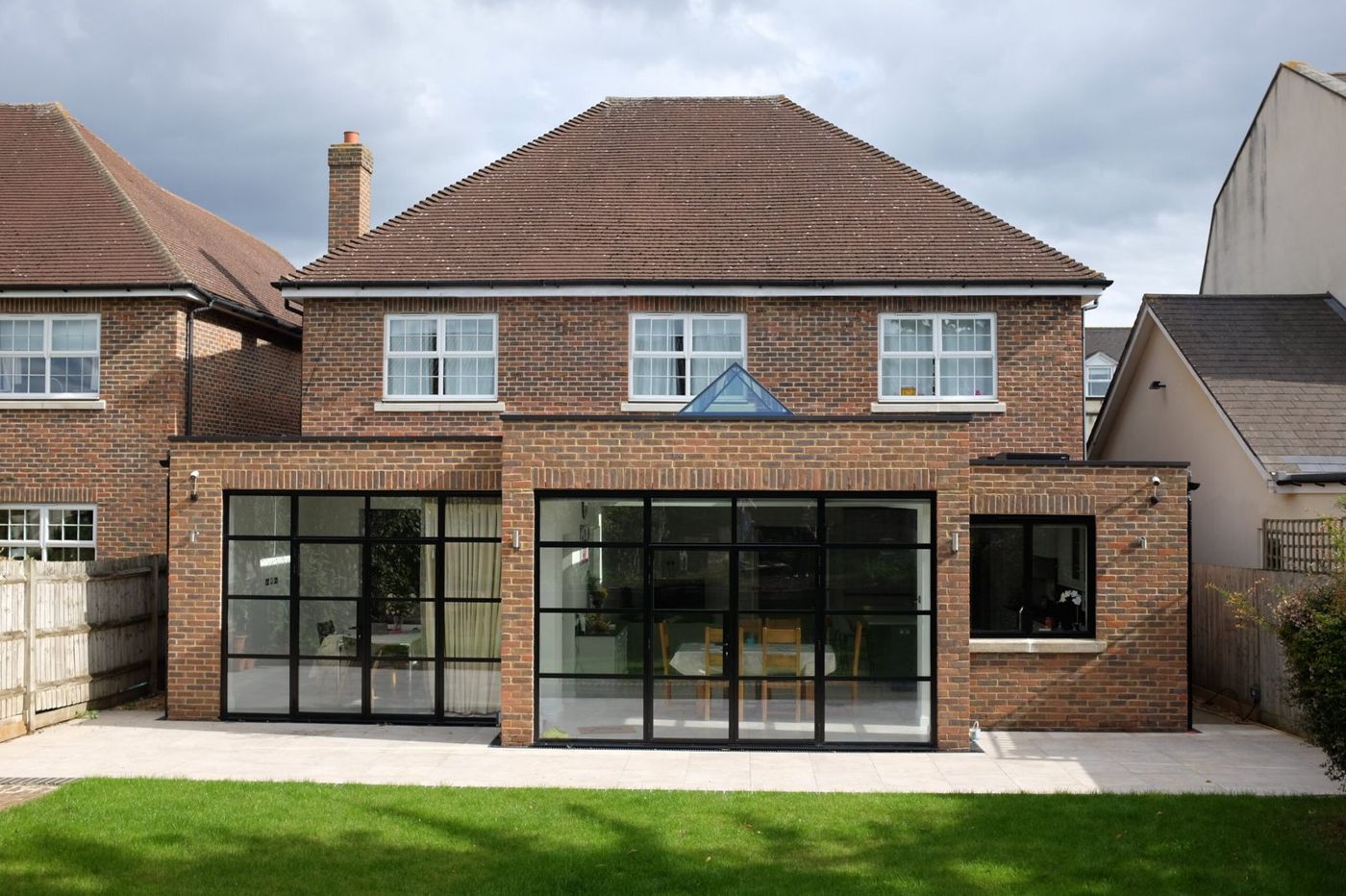
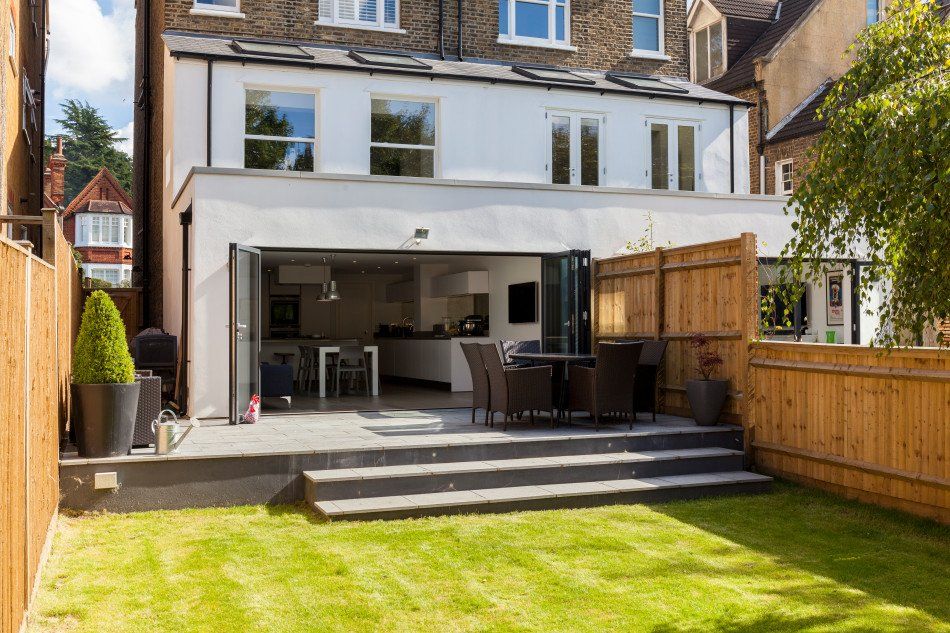
What a house extension actually costs in Cheshire in 2026 — per m² rates, worked examples by size, what drives the price up in conservation areas and brine subsidence zones, and how costs differ between Chester, Warrington, Crewe, Macclesfield and the Golden Triangle.
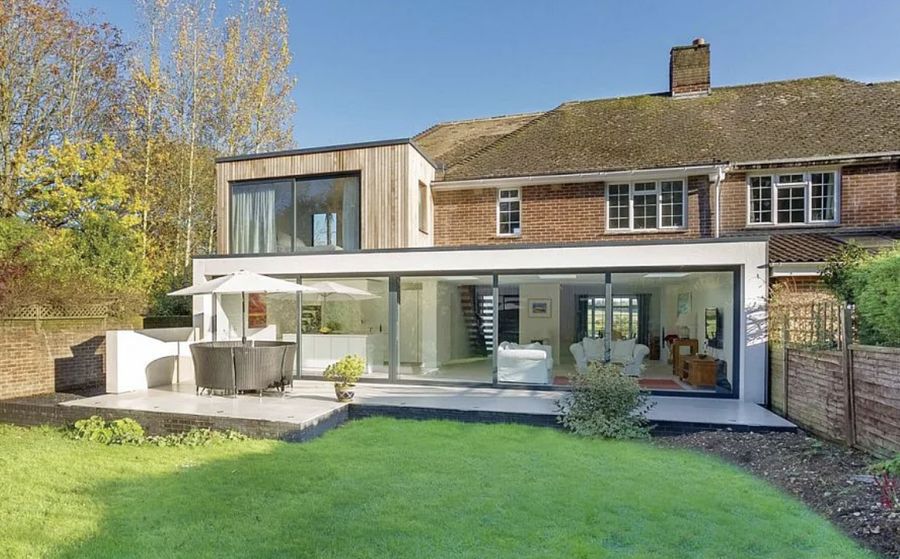
A straight answer to the question everyone asks first — with the per-square-metre rates, worked examples, and the local factors that genuinely move the number in Cheshire.
Two numbers frame every extension conversation in Cheshire.
The first is what a traditional local builder typically quotes: around £3,800 per m² and up on a like-for-like basis, once VAT, glazing, electrics, flooring and decoration are all counted. That last clause matters more than anything else in this guide, because a great many quotes exclude several of those items and look cheaper than they are.
The second is our own: from £3,000 per m² all-inclusive, with prices starting at £34,000 including VAT. All-inclusive here means foundations, structural frame, external walls and finishes, roof, glazing, electrics and lighting, flooring, and painted walls and ceilings — the extension finished and decorated, not a shell.
The comparison trap: when you compare quotes, the only meaningful question is what each one includes. A £2,400 per m² quote that excludes VAT, glazing, electrics, flooring and decoration is not cheaper than a £3,000 per m² all-in price — it is a different scope. Ask every builder for their exclusions list in writing.
Typical all-in starting prices for a single storey extension, based on our standard specification:
| Size | Roughly equivalent to | From (inc. VAT) |
|---|---|---|
| 12 m² | A modest rear extension or a side return infill | from £36,000 |
| 15 m² | A typical single storey rear extension | from £45,000 |
| 20 m² | A generous kitchen-diner extension | from £60,000 |
| 25–30 m² | A full-width rear or wrap-around extension | from £75,000 |
These are starting figures for the standard specification. Upgrades — full-width bi-folds or sliders, roof glazing, underfloor heating, a large structural opening, a high-specification kitchen — sit on top and are quoted as clearly itemised additions rather than emerging later as variations.
The lowest total cost and the simplest job. No new staircase, no upper-floor structure, no alterations to the existing roof, bedrooms untouched. Often permitted development, which removes planning delay from the programme entirely.
Higher total cost — but a lower cost per square metre, because one set of foundations, one roof, one scaffold and one set of professional fees are shared across two floors instead of one. If the brief includes bedrooms rather than just living space, two storey is usually the better use of the same money. Expect to need full planning permission.
Cost here is driven less by floor area than by three specific items: glazing specification, the structural opening needed to knock the existing rear and side walls through, and the kitchen itself. The structural opening in particular is the most commonly under-quoted element in the whole market — it needs engineered steelwork and building control sign-off. See our kitchen and wrap-around guide.
This is the biggest local variable. Cheshire East alone maintains 76 conservation areas and 2,517 listed buildings, 46 of them Grade I — more conservation areas than almost any other authority in the North West. Chester adds around 900 listed buildings and extensive Article 4 coverage across the CH1 core.
Where a conservation officer requires matched brick, natural slate, stone detailing or timber joinery, materials cost materially more than standard specification. In Chester's designated CH1 areas, heritage requirements have been estimated to add £15,000–£50,000 to refurbishment work compared with undesignated property. Listed building consent adds professional fees and time on top.
This one catches people out. Seven Consultation Areas under the Cheshire Brine Pumping (Compensation for Subsidence) Act 1952 — Northwich, Knutsford, Winsford, Crewe-Sandbach, Middlewich, Alsager and Lymm — carry a statutory obligation to consult the Cheshire Brine Subsidence Compensation Board about any development involving new foundations, at both planning and building control stage.
Where the Board recommends strengthening, the usual answer is raft or jack-point foundations, which cost more than a standard strip footing. A detailed risk assessment from a suitably qualified person may also be needed, which is a professional fee. Neither is catastrophic — but both need to be in the budget from the start rather than discovered at building control. Our designated-land guide and Northwich page cover this in detail.
Terraced streets with no rear access, narrow side returns and cottage rows are where traditional builds get expensive, because every material has to be carried through the house and deliveries multiply. Skip permits, pavement licences and parking suspensions add cost on town-centre streets. This is the one area where our approach genuinely reduces the number rather than just fixing it: components are prepared off-site and hand-assembled without cranes or heavy plant.
Properties east of Macclesfield may fall within the National Park, a separate planning authority with tighter requirements on materials — typically local stone and slate — and a longer determination process. Budget accordingly.
Build cost varies less across Cheshire than people expect. What varies is the planning route, the materials and the value ceiling — which is what actually determines whether a given extension is a good investment.
| Area | Main cost factor | Value context |
|---|---|---|
| Chester | Article 4 and conservation in the CH1 core; undesignated Hoole, Handbridge and Boughton are far cheaper to extend | City average around £237/sq ft; Hoole around £320 and Handbridge around £299 |
| Wilmslow & Alderley Edge | Green Belt proportionality; high specification expectations | Wilmslow detached around £888,000; Alderley Edge SK9 detached £1.5m–£3m |
| Knutsford | Extensive conservation coverage, the St John's Article 4, plus brine consultation | Affluent WA16 commuter market |
| Macclesfield | Three town-centre conservation areas, two Article 4 directions, National Park fringe | Well below the Golden Triangle — substantial headroom |
| Northwich | Brine consultation and possible strengthened foundations | Affordable end of the county; strong headroom |
| Warrington | Own unitary authority and local plan; Lymm is a brine Consultation Area | Premium in Stockton Heath, Grappenhall, Thelwall and Lymm |
| Crewe & Nantwich | Crewe among the cheapest to extend; Nantwich heritage materials and listed consent | Nantwich around £312,000, roughly 6% above the Cheshire East average of about £294,000 |
Being straight about this is more useful than pretending otherwise. The following sit outside our headline build price and are quoted separately and transparently where your project needs them:
All of these can be included in the turnkey package — the point is that they are named and priced rather than buried.
Industry analysis puts a quality extension at, on average, around £1.50 of value gained for every £1 spent, with side-return extensions to period terraces consistently among the strongest performers because they produce the open-plan ground floor buyers prioritise.
The honest caveat is the ceiling price on your particular street. In Crewe, Northwich or Winsford, where entry prices are low, most homes have substantial headroom before an extension over-capitalises. In the Golden Triangle the ceiling is high enough that this is rarely a constraint. In a modest street backing onto a much more expensive one, it can be. We will give you a straight view on that at the site visit rather than simply selling you the biggest scheme that fits.
Set against moving: stamp duty on a £318,000 Cheshire home runs to roughly £5,900, and on a £500,000 Golden Triangle property to £15,000 or more — before agency fees, legal costs and the price gap to a bigger house.
Our instant quotation generator gives you a tailored, all-inclusive figure in minutes — and our Price Beat Guarantee means we will better any genuine like-for-like quote.
Get a Free Consultation →Our extensions start from £3,000 per m² all-inclusive, with prices from £34,000 inc. VAT — covering foundations, frame, external walls, roof, glazing, electrics, lighting, flooring and decoration. A 15 m² single storey extension starts from £45,000 inc. VAT. Traditional Cheshire builders typically quote £3,800 per m² and up on a like-for-like basis once VAT and all finishes are counted.
Almost always because of scope rather than quality. A quote that excludes VAT, glazing, electrics, flooring and decoration will look far cheaper than an all-inclusive one for identical work. Ask every builder for their exclusions in writing, and compare like with like. The other major variable is the structural opening into the existing house, which is frequently under-quoted and needs engineered steelwork.
Higher in total, but lower per square metre. Foundations, roof, scaffold and professional fees are shared across two floors rather than one, so you get the upper floor at a marginal rather than a full cost. If your brief includes bedrooms or bathrooms, two storey is usually better value than a single storey extension plus a later loft conversion.
Yes, generally. Matched brick, natural slate, stone detailing and timber joinery cost more than standard specification, and listed building or conservation applications require heritage documentation and professional fees. In Chester's designated CH1 areas, heritage requirements have been estimated to add £15,000–£50,000 compared with undesignated property. Cheshire East has 76 conservation areas, so it is worth checking your address early.
Cheshire's salt-extraction history left a legacy of ground instability. Seven Consultation Areas — Northwich, Knutsford, Winsford, Crewe-Sandbach, Middlewich, Alsager and Lymm — carry a statutory obligation to consult the Cheshire Brine Subsidence Compensation Board about new foundations, at both planning and building control stage. Where the Board recommends strengthening, typically raft or jack-point foundations, that element costs more than a standard footing. It is a known, quantifiable figure best established before design rather than at building control.
Industry analysis points to around £1.50 of value gained per £1 spent on a quality extension, with side-return extensions to period terraces among the strongest performers. The real constraint is your street's ceiling price. Low-entry markets like Crewe, Northwich and Winsford have substantial headroom; the Golden Triangle's ceiling is high enough that over-capitalising is rare. We will give you an honest view for your specific street.
Sources: HM Land Registry / ONS UK House Price Index, Rightmove and Zoopla sold-price data, RICS BCIS and industry cost estimates, Cheshire Brine Subsidence Compensation Board, and the four Cheshire local authorities. Figures are indicative market estimates current at the time of writing and vary by project, specification and access. This guide is general information, not planning advice. Conservation area and Article 4 boundaries follow individual properties rather than street or town names, and designations change. Always confirm your own address with your local authority before starting work.