Most London extensions follow one of three planning routes: permitted development, prior approval for a larger home extension, or a householder planning application. Which one applies depends on your house type, whether you sit in a conservation area, and whether an Article 4 direction covers your property. This guide sets out the national limits and how six west, south-west and east London boroughs apply them, as at 2026.
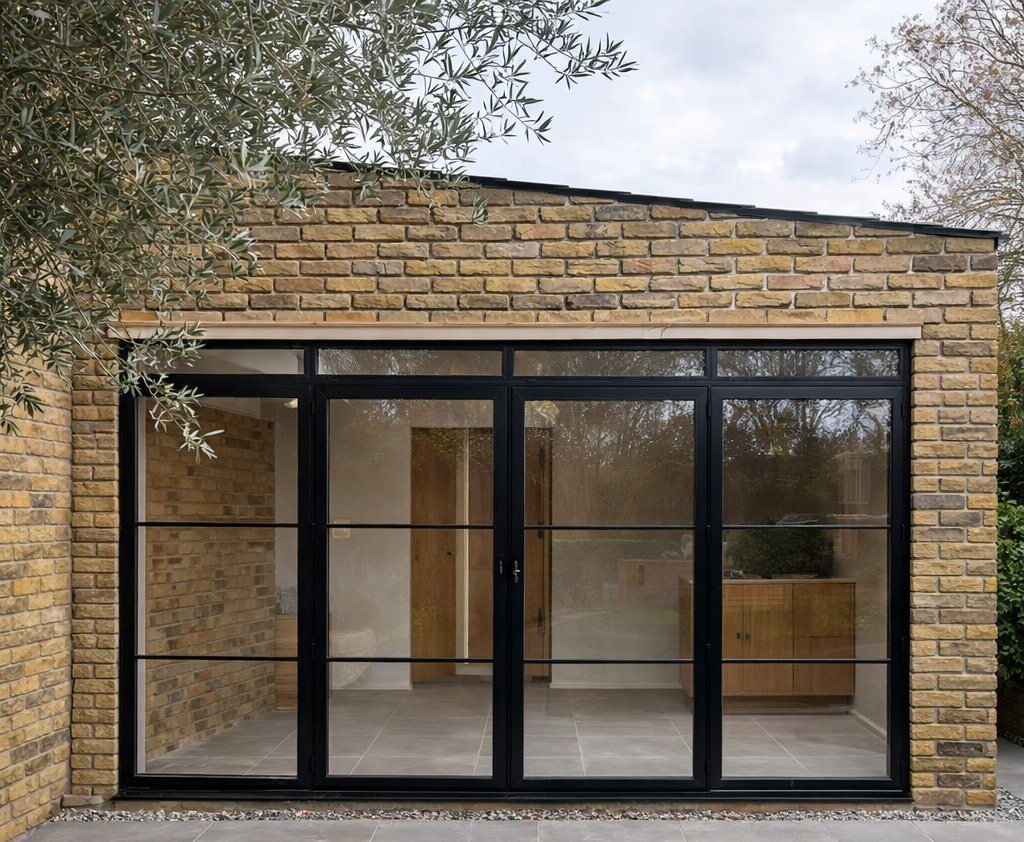
Planning permission for an extension in London is not always needed, but in conservation areas and on Article 4 streets it usually is. Every project follows one of three routes. The limits are national; what differs between boroughs is how much has been removed by conservation areas and Article 4 directions.
Under Class A of Part 1 of the General Permitted Development Order, a house (not a flat) can add a single-storey rear extension without a planning application, within these limits:
A rear extension of more than one storey up to 3m deep is also permitted development if it sits at least 7m from the rear boundary, with matching materials and no clear-glazed side-facing upper windows. It is not available in conservation areas, so most two-storey extensions in London need a householder application.
The larger home extension route lets a single-storey rear extension reach 6m on a terraced or semi-detached house and 8m on a detached house. The council writes to adjoining neighbours and gives them at least 21 days to comment. If the council has not issued a decision within 42 days of receiving a valid notification, the work may proceed. The government fee for this prior approval is £249 from 1 April 2026.
It is not automatic: a 6m prior approval application in Tooting was refused by Wandsworth in June 2026. It is also unavailable in conservation areas.
Anything beyond permitted development, or anywhere those rights have been removed, needs a householder planning application. The national fee in England is £548 from 1 April 2026, and the statutory period for the council to decide is 8 weeks from validation. Applications needed only because an Article 4 direction has removed permitted development rights carry no planning fee.
A lawful development certificate for a proposed development confirms in writing that a scheme is permitted development. It is optional but useful when you sell. The fee is half the full application fee, so £274 for a householder extension at 2026 rates.
Side return extension planning permission: most side return extensions in London extend beyond a side wall, so planning treats them as side extensions. Inside a conservation area they need full planning permission.
A conservation area extension in London faces three national restrictions. The larger home extension (6m and 8m) prior approval route is not available. Side extensions, which include most side return infills, need full planning permission. Cladding the outside of the house is not permitted development.
A single-storey rear extension within the 3m and 4m limits can still be permitted development in a conservation area unless an Article 4 direction removes it. Coverage is extensive: conservation areas cover more than 70% of Kensington and Chelsea and roughly half of Hammersmith and Fulham.
An Article 4 direction is a council order that removes specific permitted development rights from a defined set of properties, so work that would otherwise be automatic needs a planning application.
Directions are drawn around particular houses or parts of streets, so neighbours can have different rights. Hackney's De Beauvoir direction (2008) applies to some properties only; Wandsworth's Putney Lower Common direction covers 15–36 Commondale only. Hackney's Shacklewell Green direction covers April Street, Perch Street, Seal Street, 97–129 Shacklewell Lane and Milton House Mansions, and removes all householder permitted development, including rear extensions.
Most householder directions control street-visible changes: windows, doors, roofs, porches, front walls and painting. Some, such as Norland and Holland Park in Kensington, also reach extensions and garden buildings. Ealing's borough-wide HMO direction (in force 14 November 2025) does not affect ordinary extensions.
Confirm your address, not your street: this guide is general information as at 2026. Article 4 and conservation area boundaries follow individual properties and change over time. We check your exact address against the council's register and planning history before any design work starts.
Flats and maisonettes have no householder permitted development rights, so any extension to a flat needs a planning application. In Hackney around 81% of homes are flats or maisonettes, and converted period houses and mansion blocks are common across west London. A ground-floor flat can still be extended, through a full application.
A listed building needs listed building consent for works that affect its character, in addition to any planning permission. Kensington and Chelsea alone has over 4,000 listed buildings, and its basement policy prohibits excavation under any listed building, including its vaults.
Three of the six boroughs have the basement policies compared below, and Hammersmith and Fulham goes further with a borough-wide Article 4 direction (in force 26 April 2018) meaning every basement there needs planning permission. We build above-ground extensions, not basements, but many homeowners weigh the two.
| Rule | Hammersmith & Fulham (Policy DC11) | Kensington & Chelsea (Policy CL7) | Wandsworth (Basement Extensions Guidance 2015) |
|---|---|---|---|
| Depth | Single storey | One storey only; no further basement where one exists | Single storey; multi-level not appropriate |
| Garden coverage | No more than 50% of garden depth, and not beyond 50% of the host building's depth from the main rear wall | Max 50% of the garden or open part of the site; unaffected garden kept as one continuous area | Retain at least half the rear garden; front lightwells leave at least 50% of the front garden |
| Soil over basement | At least 1m under a garden | At least 1m above any basement under a garden | At least 1m |
| Construction statement | Construction Method Statement by a qualified engineer, incl. traffic management | Structural method statement and construction traffic management plan under the Basements SPD | CMS strongly encouraged, independently verified at the applicant's cost |
| Other limits | Discreet lightwells; set back from boundaries; no self-contained basement flats in Flood Zone 3 rapid-inundation areas without safe escape | No excavation under a listed building; protect trees, structural stability and Underground tunnels; SuDS and sewer-flood protection | Front lightwell limits as above |
Counts are as at 2026 and some are approximate: treat them as a guide, not a check on your address.
| Borough | Authority | Conservation areas | Notable Article 4s | Key local issue |
|---|---|---|---|---|
| Hammersmith & Fulham | London Borough of Hammersmith & Fulham (Local Plan 2018) | Around 44, roughly half the borough | Borough-wide basement direction (2018); property-specific directions in conservation areas | Tidal Thames Flood Zone 3 along the Fulham riverside; Policy DC11 basements |
| Ealing | London Borough of Ealing | Around 29, reviewed 2024–25 | Borough-wide HMO direction (not extensions); Bedford Park and other conservation-area directions | SPD 4 Residential Extensions; River Brent and Grand Union Canal flood zones |
| Kensington & Chelsea | Royal Borough of Kensington and Chelsea | 41, covering more than 70% of the borough | Several, incl. Norland and Holland Park | Over 4,000 listed buildings; Policy CL7 basements; assume a full application |
| Richmond upon Thames | London Borough of Richmond upon Thames | More than 80 (the SPD lists 85) | Petersham, Mays Road, East Sheen Avenue, Cole Park Road and others | Tidal Thames flood zones (Policy LP21); Trees and Development SPD (June 2026) |
| Hackney | London Borough of Hackney (LP33, 2020) | 35 | De Beauvoir, Brownswood, Well Street, Beck Road, Shacklewell Green | Around 81% flats; Residential Extensions and Alterations SPD (January 2026); surface-water flooding |
| Wandsworth | Wandsworth Borough Council (Local Plan 2023–2038) | 46 | Householder directions in 8 conservation areas | Housing SPD; Thames, Wandle and Beverley Brook flood zones; basement guidance |
Hammersmith and Fulham has around 44 conservation areas, from Parsons Green, Moore Park and Walham Grove in SW6 to St Peter's Square, Brook Green and Ravenscourt & Starch Green in W6. Many houses there have specific rights removed, so the council's register is checked address by address. Old Oak and Park Royal fall under the OPDC, not the council. See our house extensions in Hammersmith & Fulham page.
Ealing has around 29 conservation areas, and its 2024–25 review changed roughly 20 of them, extending 14, reducing 7 and adding Lammas Park. Bedford Park, Brentham Garden Suburb, Ealing Green and Montpelier are among the best known; conservation-area Article 4s such as Bedford Park's remove some householder rights. More on our house extensions in Ealing page.
Kensington and Chelsea is the most constrained of the six. With 41 conservation areas, over 4,000 listed buildings and the Norland and Holland Park direction, it is safest to assume a full application for a mews house or townhouse rear infill. Read our house extensions in Kensington & Chelsea page.
Richmond has more than 80 conservation areas, including Richmond Hill, Kew Green, Twickenham Riverside, Barnes Green, Castelnau and St Margarets Estate. Named Article 4 directions include Petersham, Mays Road, East Sheen Avenue, Cole Park Road, Rosecroft Gardens, The Mall, Mallard Place and Archway. See our house extensions in Richmond page.
Hackney has 35 conservation areas, the largest being Graham Road and Mapledene. Householder Article 4s cover parts of De Beauvoir, Brownswood and Well Street (in force 9 May 2025), Beck Road (28 May 2025) and part of Shacklewell Green. There is no borough-wide householder direction. Visit our house extensions in Hackney page.
Wandsworth has 46 conservation areas, including Clapham Common, Nightingale Lane, Wandsworth Common (taking in the Toast Rack streets) and Shaftesbury Park Estate. Householder Article 4s apply in eight: Dover House Estate, Heaver Estate, Latchmere Estate, Putney Lower Common, Roehampton Village, Shaftesbury Park Estate, Totterdown Fields Estate and Wandsworth Common. They control street-visible changes. See our house extensions in Wandsworth page.
Where an application is needed, each council applies its own design guidance.
Most councils also apply a 45-degree test from the nearest neighbouring habitable-room window.
An extension in Flood Zone 2 or 3 usually needs a flood risk assessment; in Richmond, Policy LP21 asks for a proportionate site-specific assessment covering finished floor levels, safe access and escape, and no increased risk elsewhere. The main areas are the tidal Thames (Fulham riverside, Twickenham, Ham, Petersham, Kew, Battersea, Wandsworth Town), the River Brent in parts of Hanwell and Perivale, and the Wandle in Wandsworth. In Hackney the main risk is surface water, with over 3,400 homes at risk. Flood zones are address-specific.
Trees protected by a tree preservation order need consent before works, and in Richmond these applications can take up to around 8 weeks. All trees in conservation areas are protected: you must give the council a Section 211 notice and it has 6 weeks to respond. Fines for unauthorised works reach £20,000, or are unlimited in the Crown Court. We flag trees near the footprint at survey stage.
Building control approval is needed for every extension, including those built under permitted development with no planning application.
The Party Wall etc. Act 1996 applies to most terraced and semi-detached extension work in London. The notice periods are:
The neighbour has 14 days to respond. If they do not respond to a party structure or excavation notice, a dispute is deemed to have arisen. We manage planning, party wall notices and building control approval through to sign-off.
For a London extension that needs a householder application, the stages below take up to roughly 21 weeks from design to handover, as some run in parallel. Permitted development schemes are shorter.
Prices start from £34,000 inc. VAT, or from £3,000 per m² all-inclusive. Our house extensions London page covers the full specification.
Not always. A London house outside a conservation area, with no Article 4 direction and no previous extensions, can usually add a single-storey rear extension of up to 3m (terraced or semi) or 4m (detached) under permitted development. Larger rear extensions need prior approval or a householder application, and flats, listed buildings and many conservation area properties need an application for almost any extension. Because designations follow individual properties, we check your exact address with the council before design starts. This is general information as at 2026, not planning advice.
An Article 4 direction is an order made by a London borough that removes specific permitted development rights from defined properties, so work that would otherwise be automatic needs planning permission. Most London householder directions control street-facing changes such as windows, doors, roofs and front walls, but some go further: Hackney's Shacklewell Green direction removes all householder rights, including rear extensions. Directions are drawn around individual houses or parts of streets, so neighbours can have different rights.
Sometimes. In a London conservation area, a single-storey rear extension within the 3m or 4m permitted development limits may still proceed without an application, unless an Article 4 direction removes that right. However, the larger home extension prior approval route is not available, side extensions (including most side return infills) need full planning permission, and cladding is not permitted development. In Kensington and Chelsea it is safest to plan for a full application.
Prior approval lets a single-storey rear extension to a London house reach 6m (terraced or semi) or 8m (detached). The council notifies adjoining neighbours, who have at least 21 days to comment. If the council has not decided within 42 days of receiving a valid notification, the work may go ahead. The fee is £249 from 1 April 2026. It is not available in conservation areas, and it is not automatic: Wandsworth refused a 6m prior approval application in Tooting in June 2026.
Often, yes. Most side return infills on London terraces extend beyond a side wall, so planning treats them as side extensions. In a conservation area a side extension always needs full planning permission, and many side returns in Fulham, Wandsworth, Ealing and Hackney sit in conservation areas. Outside one, some side returns can be permitted development if they meet the national limits.
For a London extension built under permitted development, a lawful development certificate is optional but useful. It is the council's written confirmation that the proposal is lawful, removing doubt about previous extensions or Article 4 coverage when you sell. The fee for a proposed development is half the full application fee, which is £274 for a householder extension at 2026 rates in England.
The statutory period for a London borough to decide a householder application is 8 weeks from validation, and 42 days for a larger home extension prior approval. Party Wall Act notices need one or two months. Our planning and design stage, where needed, typically takes 8–10 weeks, after which the build is 4–6 weeks on site, on average 6 weeks on site.
Building control approval is needed for every London extension, even one built under permitted development with no planning application. The Party Wall etc. Act 1996 applies to most terraced and semi-detached work: a party structure notice must be served at least two months before work, and line of junction or adjacent excavation notices at least one month before. Neighbours have 14 days to respond. We manage planning, party wall notices and building control approval through to sign-off as part of our turnkey London service.
Sources: General Permitted Development Order 2015, Schedule 2, Part 1, Class A; GOV.UK, Planning fees: annual indexation from 1 April 2026; GOV.UK, Determining a planning application; GOV.UK, The Party Wall etc. Act 1996: explanatory booklet; Planning Portal; local plans and SPDs of the six borough councils named above. Current as at October 2026. This guide is general information, not planning advice. Conservation area and Article 4 boundaries follow individual properties rather than streets or postcodes, and designations change. Always confirm your own address with your council; we carry out this check for every Vita Modular client.