


Enquiry
Complete our customer enquiry form for an instant fixed price so we can fully understand your project requirements. One of our dedicated team members will contact you to arrange a design consultation.
2 weeks
Vita Modular was commissioned at The Hollies, Church Street, Unstone in Dronfield, Derbyshire to deliver a combined single-storey and two-storey extension — a single-storey element linking the new accommodation into the existing house, and a two-storey element carrying the bulk of the new floor area.
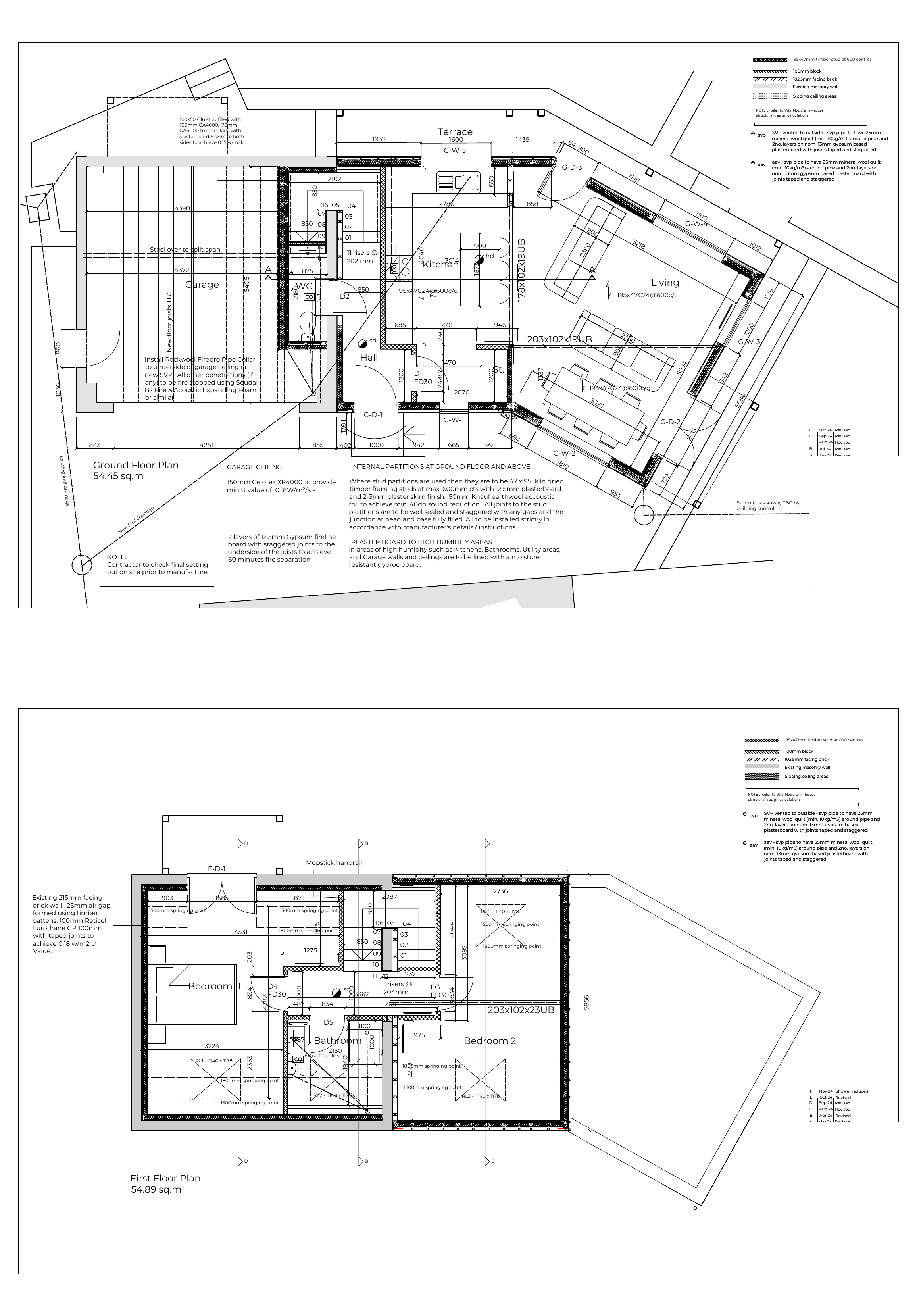
The finished scheme delivers 54.45m² at ground floor (open-plan kitchen and living space, hall, WC and store) and 54.89m² at first floor (two double bedrooms and a family bathroom): 109m² of new usable space, with the two-storey element placed where the height works hardest and the single-storey element keeping the connection to the house low and neighbourly. The project ran for 14 weeks on site and completed at a gross total of around £281,300 including VAT.
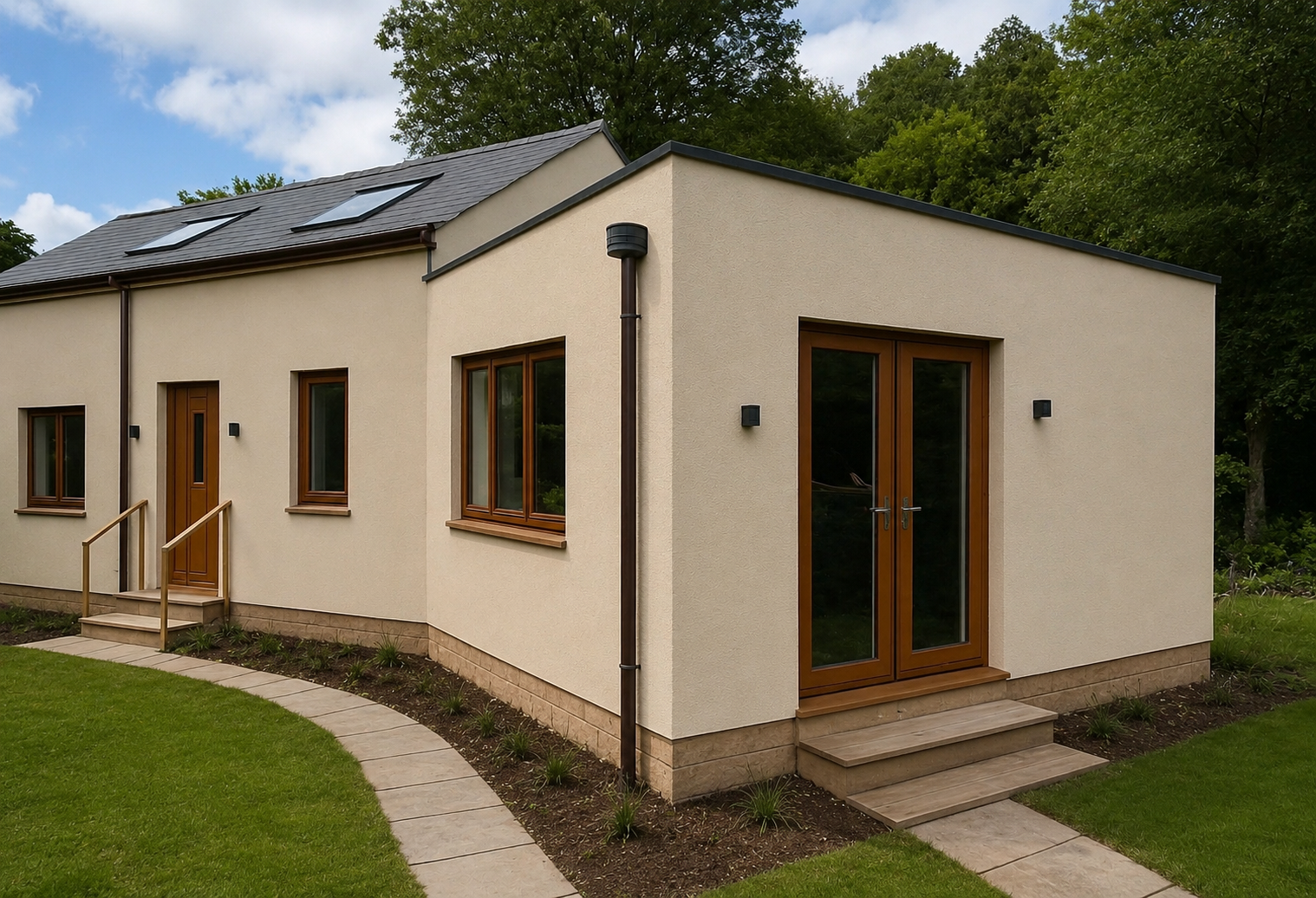
The starting point was an awkward one. The existing structure at the bottom of the plot read as entirely separate from the main house — a gable end with an ugly external timber staircase bolted to the flank, a log store beneath it, and bins and garden clutter gathering at its base. It faced onto a gravel yard and a brook, in a setting far better than the building deserved.
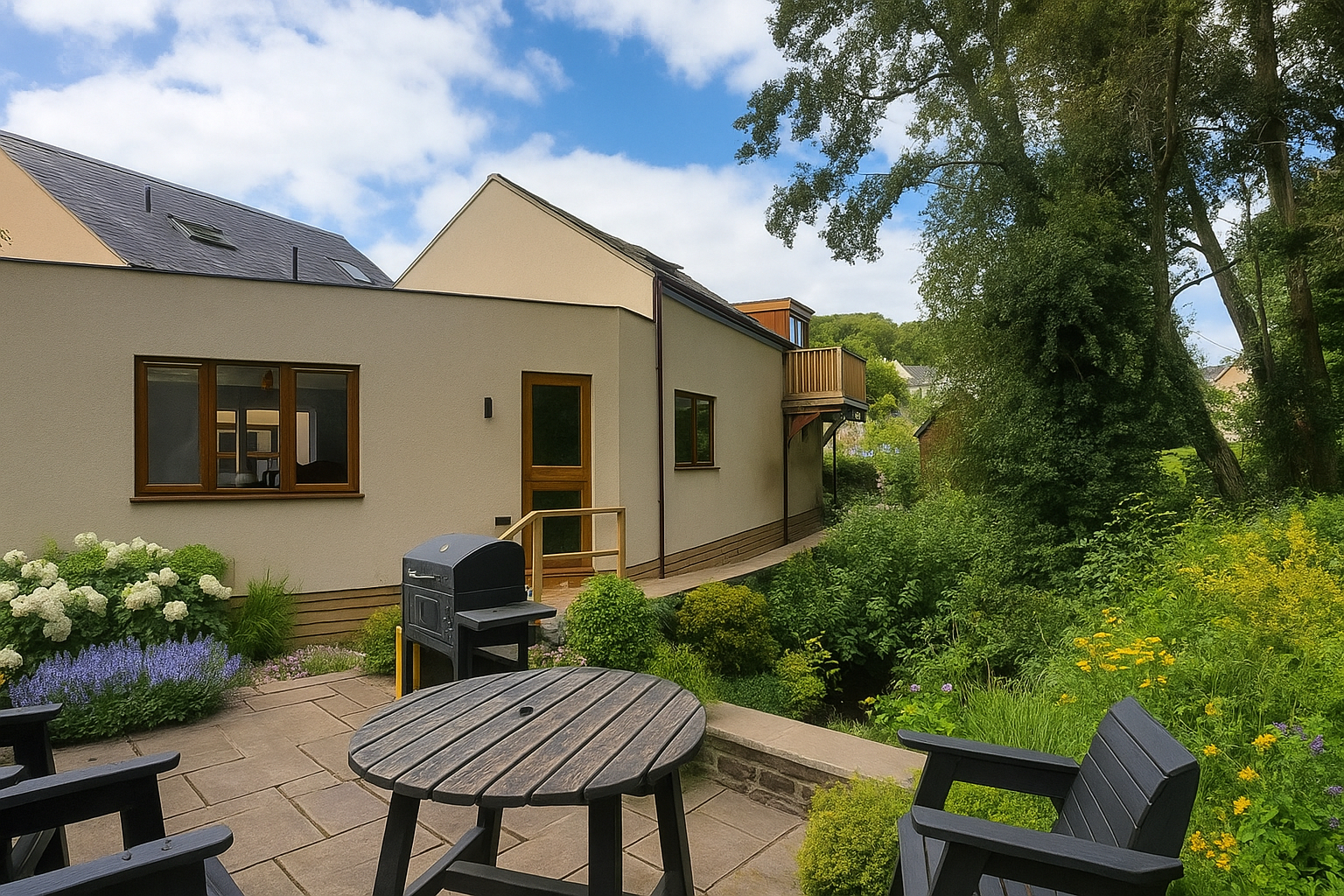
The design keeps the existing masonry shell and gable but reworks the whole composition. The external staircase and its landing are removed entirely, the wide ground-floor opening is replaced with glazing and a new entrance, and a single-storey linking element ties the two-storey accommodation into the main house. Render, timber-effect windows and doors and a slate roof with rooflights bring the whole thing into one family. What read as a service building at the bottom of the yard now reads as part of the home, opening onto a paved terrace above the brook.
Removing the external staircase freed the elevation but created the central design problem: the first floor now needed to be reached from inside. The solution is a new internal staircase — eleven risers at 202mm — rising from a new hall to a landing that serves both bedrooms and the bathroom, with a mopstick handrail and a compliant balustrade.
At ground floor, the plan gives 54.45m²: an open-plan kitchen and living space with doors onto the terrace, a hall, a WC and a store. Above, the 54.89m² first floor carries two double bedrooms and a family bathroom, with the sloping ceilings of the roof form worked into the layout — the shower room in particular uses the pitch and a rooflight to make a compact space feel generous.
Working with retained masonry means bringing an existing envelope up to modern performance rather than building it to standard from scratch — a more demanding exercise in building-regulations terms. The full specification is set out in the Scope of Works below.
The on-site programme ran for 14 weeks, from the start of demolition and structural works through to handover, and the project completed at a gross total of around £281,300 including VAT. Vita Modular managed the scheme end to end on a fixed-price JCT contract, with a staged payment plan tied to real milestones — deposit, commencement of demolition and structural works, watertight completion, interim payments and handover — so the client always knew exactly where the project stood financially.
The technical package was developed in house by Vita Modular’s own architectural and structural designers, and taken through eleven revisions before construction. That level of pre-construction work matters when you build off retained structure: when the existing floor structure was opened up on site and found to be partly forming the roof structure, the team was able to design, agree and install additional steelwork and padstones without the programme stalling — a variation discussed and signed off with the client on site.

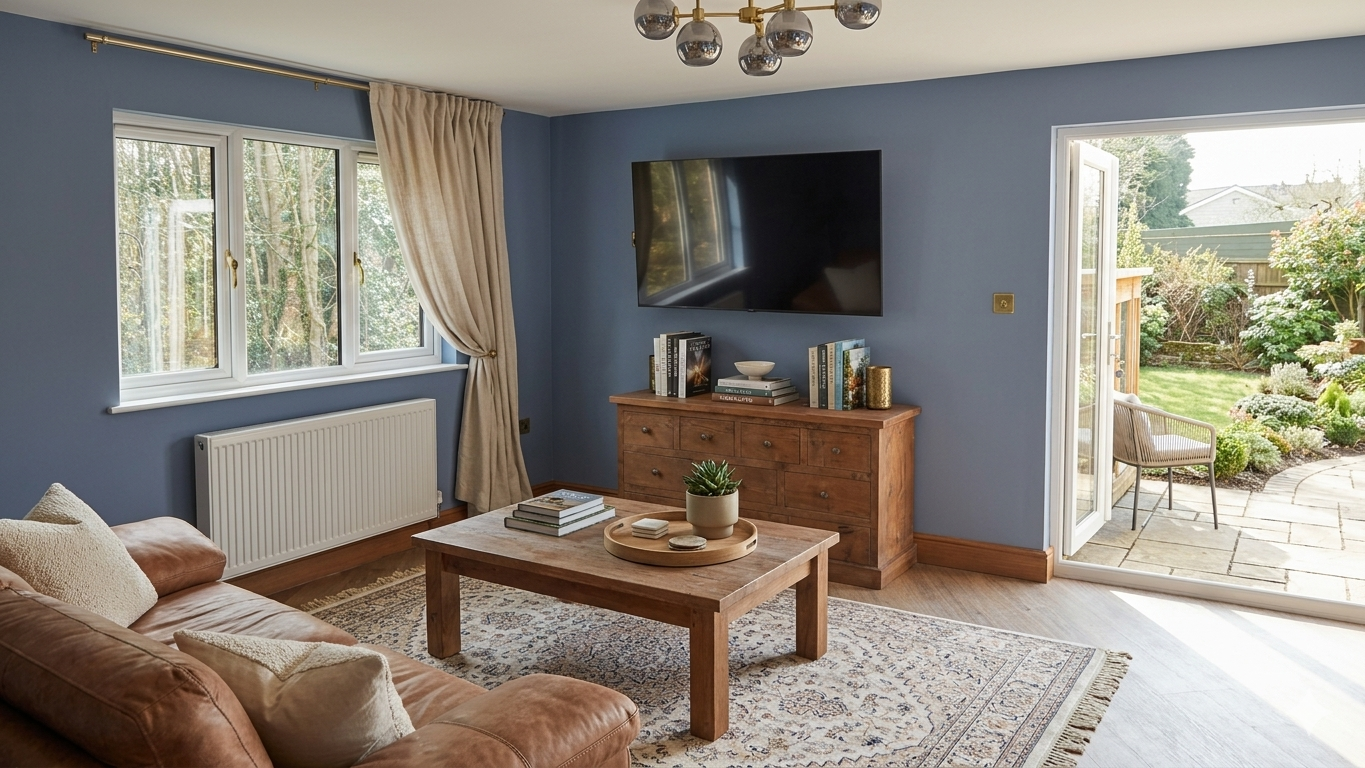
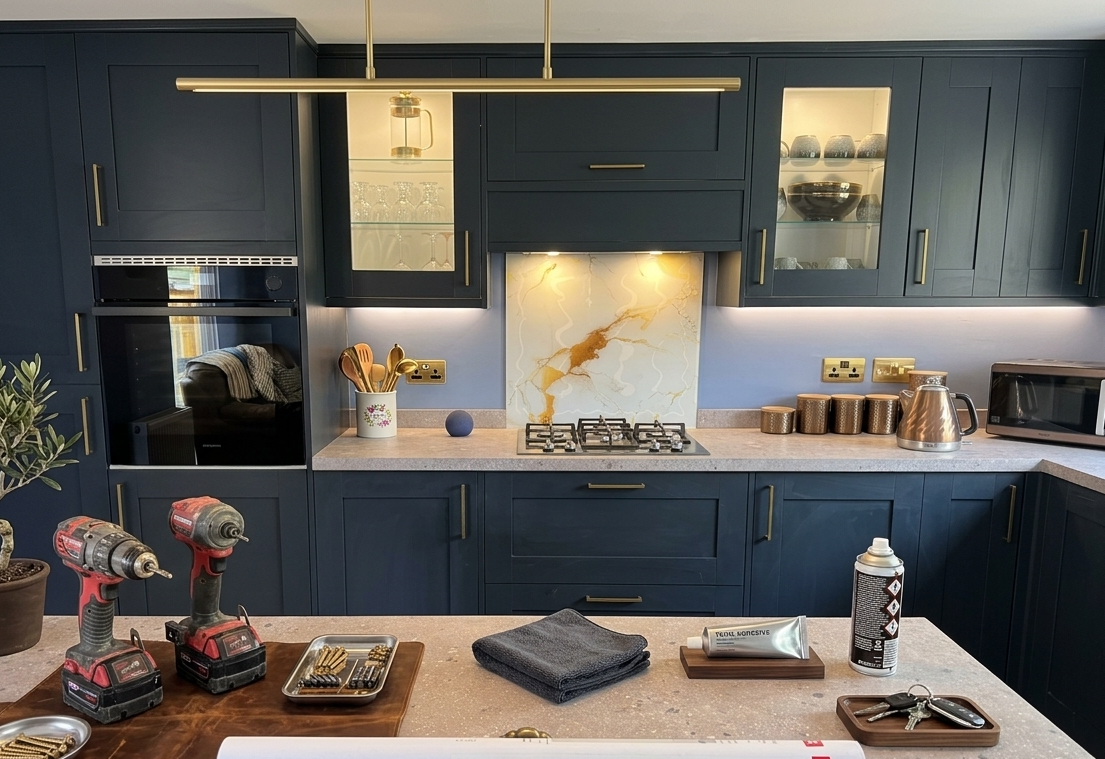
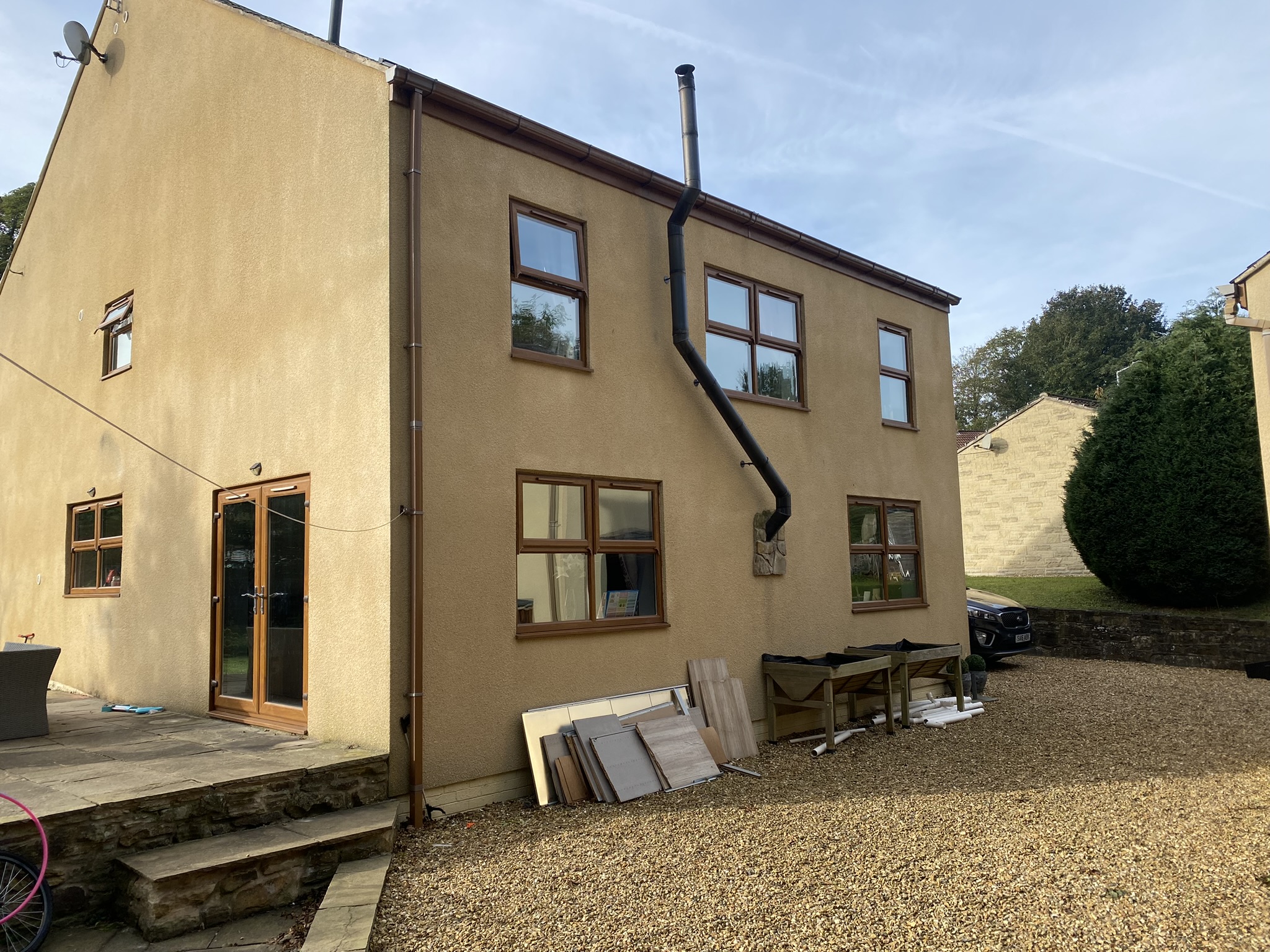


We’d more or less written that end of the property off. Seeing it become two proper bedrooms, a bathroom and a kitchen we actually want to sit in — with the terrace and the brook right there — has changed the whole house. When the floor structure threw up a surprise, it was dealt with on site and explained to us properly.
Watch the video testimonial with the client:
Can you combine a single-storey and a two-storey extension on one project?
Yes — this project in Dronfield, Derbyshire did exactly that. A single-storey element links the new accommodation into the existing house, while a two-storey element delivers the bulk of the space: an open-plan kitchen, living area, hall, WC and store at ground floor, with two double bedrooms and a family bathroom above — 109m² in total. Combining the two lets you put height only where it earns its keep, which keeps the massing sympathetic to the existing house and its setting, and often makes a scheme easier to get through planning than a full two-storey addition across the whole footprint.
Do I need building regulations approval for a two-storey extension?
Yes. Any two-storey extension requires building regulations approval, covering insulation and U-values, fire separation, means of escape, ventilation, drainage and structural design. On this Dronfield project, the ground-floor ceiling was built up with 150mm Celotex XR4000 and two layers of 12.5mm gypsum fireline board with staggered joints to achieve 60 minutes fire separation, FD30 fire doors were fitted, SVP penetrations were fire-collared, and the whole scheme was taken through building control to a completion certificate — all managed by Vita Modular as part of the fixed-price contract.
What insulation standard does a two-storey extension need to meet?
On this Dronfield, Derbyshire extension, the retained 215mm facing brick walls were upgraded with a 25mm air gap formed using timber battens and 100mm Recticel Eurothane GP with taped joints, achieving a 0.18 W/m²K U-value. The ground-floor ceiling used 150mm Celotex XR4000 to reach the same 0.18 W/m²K standard, and new internal partitions were built with 100mm and 70mm GA4000 to achieve 0.15 W/m²K. The result is an envelope that performs to new-build standard throughout the new accommodation.
How much does a single-storey and two-storey extension in Dronfield cost?
This project came in at a final account of around £281,300 including VAT, delivered on a fixed-price JCT contract with a staged payment plan tied to demolition, watertight completion and handover milestones. That covered demolition and structural works, removal of the external timber staircase, a new steel-supported floor structure, a full insulated envelope to 0.18 W/m²K, a new internal staircase, new boiler, radiators and central heating, new foul drainage and storm soakaway, and a complete two-storey fit-out of 109m² including a kitchen, bathroom and shower room. The on-site programme was 14 weeks. Every project of this type is priced individually against survey and specification.
How long does a single-storey and two-storey extension take to build?
This project ran for 14 weeks on site, from the start of demolition and structural works through to handover. That programme covered the demolition and structural phase, the new steel-supported floor structure, the insulated envelope, the new internal staircase, heating and drainage, and the complete two-storey fit-out of 109m² across two double bedrooms, a bathroom, a shower room, a kitchen and an open-plan living space. Structural and watertight completion was reached as a distinct milestone before fit-out began.
What happens if the existing structure throws up a surprise mid-build?
When you build off retained structure, it usually does. On this project, the existing floor structure was found on opening up to be partly forming the roof structure — so additional steelwork, padstones and carpentry were needed to support it properly. That was designed, costed, discussed with the client on site and issued as a formal variation, and the programme continued. This is exactly why Vita Modular works to a JCT contract with a transparent variations process rather than a handshake and a verbal price.
Is an extension like this suitable for multigenerational living?
Yes — that is precisely what a scheme like this delivers. With its own kitchen, living space, WC, two double bedrooms and a family bathroom, it functions as self-contained accommodation while remaining physically connected to the main house. It suits an ageing parent, an adult child, a live-in carer or a home-working or letting use, depending on how it is set up. We can advise on the layout and services implications of each at design stage.

This 4m x 3m Garden Room used as a home office is set in the beautiful Warwickshire surroundings and finished to our impeccable Vita Modular standards.
Read More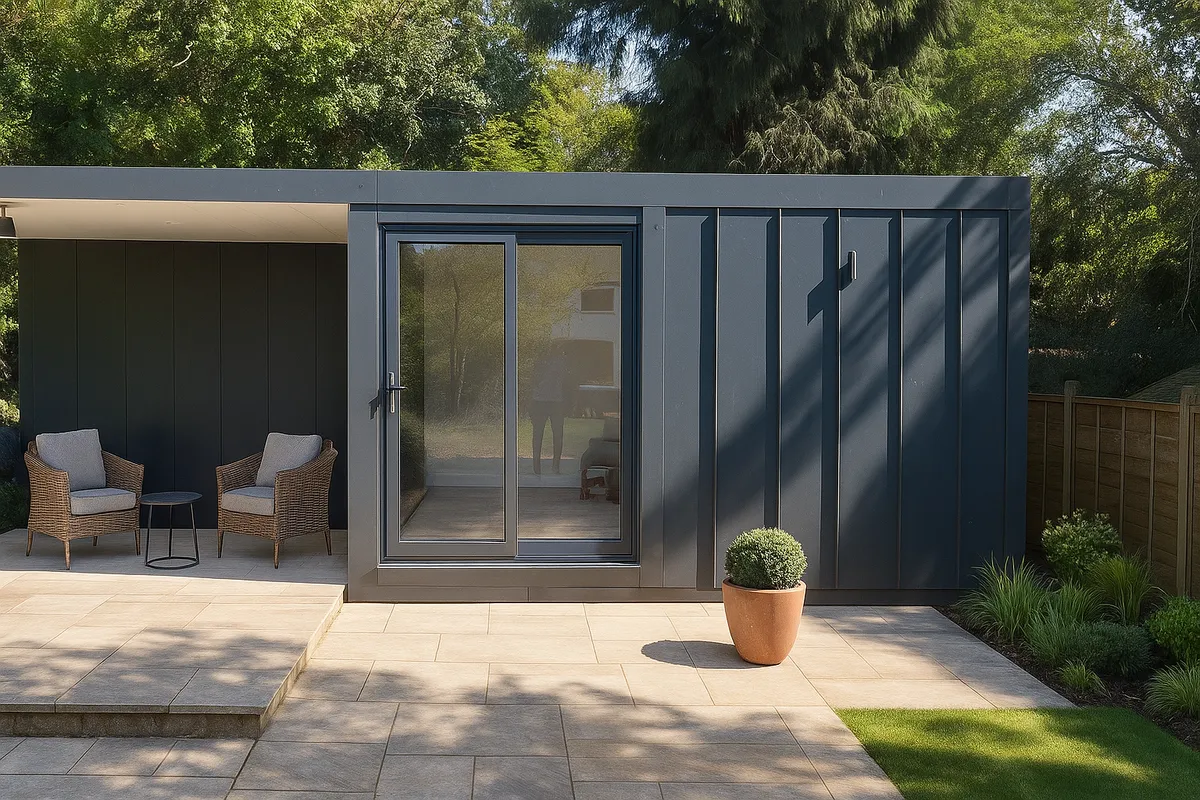
Our client in St Albans needed a stylish, fully-functional garden room to serve as a versatile space, moving beyond a simple storage shed to a true extension of their home.
Read More
Martine came to us in need of a fully equipped garden room to facilitate her from home physiotherapy practice.
Read More
We were delighted to complete this garden room build for such a fantastic couple in their tranquil rural setting with beautifully manicured gardens.
Read More
The client came to us looking for a high quality Garden Room space that could be used as a home office.
Read More
The client came to us looking for a high quality Garden Room space that could be used as a home studio.
Read MoreWe’re so confident in the longevity and performance of our structural steel frame modular buildings that we offer an industry-leading 10 year guarantee as standard.
We are proud to offer an industry-leading guaranteed 6 week lead time from the date of order.
Our distinctive range of exterior cladding finishes and architectural embellishments is quite simply unparalleled. There are no limits to the space we can create for you.
Our price includes everything from delivery, installation, foundations, doors & windows, painted walls, electrics, lighting and flooring, to name just a few.
Our modular buildings comply with all aspects of current UK building regulations, so you not only have complete peace of mind that your extension is built to last but you also have a space that can be comfortably used all year round.
We use the most advanced modular construction technology to precision craft every modular building at our Warwickshire production facility.
